

Why Do I Use So Much Air When Scuba Diving?
You check your pressure gauge and see 60 bar. Your buddy checks theirs and still has 100.
You started with similar tanks, followed the same dive, and have been underwater for exactly the same amount of time. So why are you using so much more air?
First, don’t treat the number as a score.
Using more air than your buddy doesn’t automatically mean you are a poor diver. Depth, current, buoyancy, movement, stress, water temperature, body size, equipment, and experience can all affect how quickly you go through a tank.
The better question isn’t simply, “How can I breathe less?”
It’s why am I using this amount of air, and what can I improve?
Why Do Some Divers Use More Air Than Others?
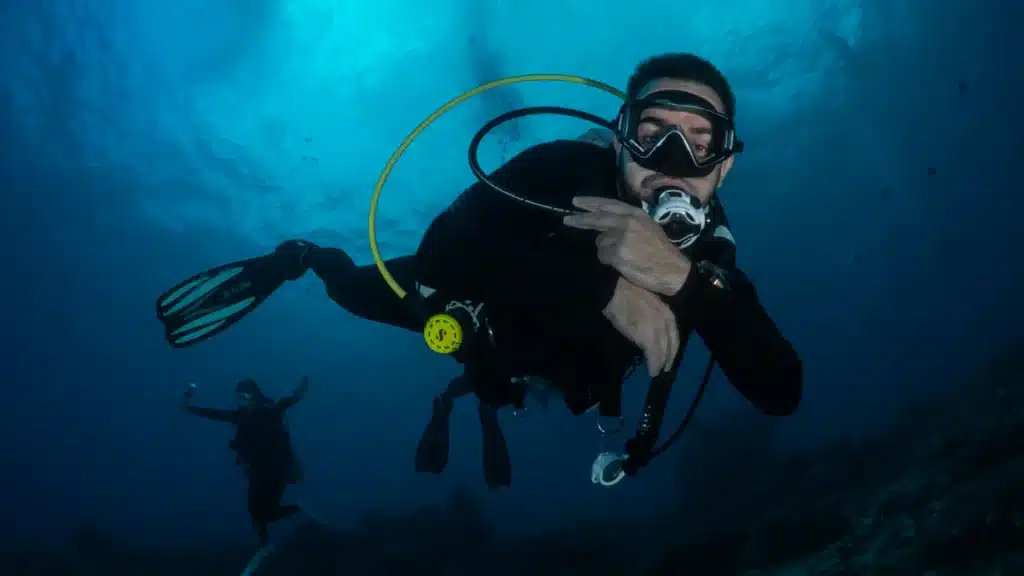
Scuba divers use different amounts of air because their bodies, breathing patterns, dive profiles, and workload underwater are different.
A relaxed diver hovering comfortably at 12 metres may use considerably less air than the same diver swimming against a current at 25 metres. A nervous beginner may also breathe faster than an experienced diver who feels completely at home underwater.
This is why comparing the pressure left in your tank with someone else’s at the end of a dive doesn’t tell you very much on its own.
To understand your air consumption, you need to look at what was happening during the dive.
The Biggest Things That Affect Your Air Consumption
Depth
Depth has a bigger effect on your air supply than many new divers realize.
As you descend, pressure increases, so each breath uses more gas from your cylinder. At around 10 metres, the pressure is about twice the surface pressure, and at 20 metres, about three times.
This means you can breathe at the same relaxed pace and still use your air faster on a deeper dive.
If you finish a deep dive with less air than a shallow reef dive, it doesn’t necessarily mean your breathing got worse. The dive itself required more gas.
Stress and Nervousness
Remember your breathing just before an important meeting, exam, or presentation?
Stress can change it without you consciously deciding to breathe faster.
The same thing can happen underwater.
A diver who feels nervous may breathe faster and deeper, tense their muscles, move more than necessary, and constantly check equipment or surroundings. If this feeling becomes overwhelming, understanding what happens when a diver panics underwater can also help you recognize the warning signs before anxiety escalates.
This is particularly noticeable with new divers because so much is happening at once.
You are thinking about your mask, ears, buoyancy, depth, buddy, instructor, fins, breathing and everything you can see around you.
As these things become familiar, the mental workload often decreases. You relax, your movements become more controlled, and your breathing may naturally become more efficient.
Buoyancy
Good buoyancy isn’t only about protecting coral or looking comfortable underwater. It can also make a significant difference to how hard you have to work.
Imagine a diver who sinks slightly, kicks upward to compensate, rises too much, dumps air, sinks again, then repeats the process.
That diver is constantly working.
A diver who can maintain neutral buoyancy can simply hover and let the water do most of the work.Current
Less unnecessary movement usually means less effort, and less effort generally means lower breathing demand.
This is one reason improving your buoyancy can make diving feel dramatically easier.
Your Position in the Water
Watch an experienced diver and you’ll often notice how naturally they stay horizontal in the water. This balanced position is known as trim.
Good trim reduces drag, making it easier to move without unnecessary kicking or effort. An upright position creates more resistance, which means your body has to work harder.
Because water is much denser than air, even small improvements in body position can save energy and, in turn, help you use less air.
How Much You Move
Experienced divers can sometimes look surprisingly lazy underwater, and that’s usually a good sign.
New divers often move more than necessary, using their hands, constantly finning, adjusting depth, or chasing marine life for a photo. All that extra movement uses energy, and more effort means more air.
Learning when not to move is an underrated diving skill. If you’re neutrally buoyant and don’t need to go anywhere, simply float, look around, and enjoy the dive.
Current
Current can completely change your air consumption.
Swimming gently along a reef and swimming against moving water are very different workloads.
If you try to fight a strong current, your legs work harder, your heart rate increases, and your breathing usually follows.
This is particularly relevant when scuba diving around Nusa Penida, where current and conditions can vary considerably between dive sites and at different times of the day.
Good current diving isn’t about proving how strongly you can swim.
Depending on the site and dive plan, it may mean using the current rather than fighting it, staying close to the reef where appropriate, maintaining good positioning, and following your guide’s instructions.
Sometimes the most efficient thing a diver can do is stop trying to overpower the ocean.
Cold Water
Feeling cold may not seem connected to air consumption, but it can make a difference.
Cold water can make you tense, move more, and use extra energy. Around Bali, this is especially noticeable when you encounter cooler water or a thermocline around Nusa Penida.
The right exposure protection is therefore about more than comfort. Staying warm helps you remain relaxed, which can also support calmer, more efficient breathing.
Your Body Is Not Your Buddy’s Body
This point is often forgotten.
People are different.
Body size, lung volume, metabolism, fitness, breathing patterns and physiology vary from one diver to another.
A small diver and a large diver should not automatically expect to consume exactly the same amount of gas.
Experience can improve efficiency, but there isn’t a universal pressure reading that every good diver should have at the end of a dive.
Your buddy’s remaining pressure isn’t your score.
Is High Air Consumption a Sign of a Bad Diver?
No.
Using more air than another diver does not automatically make you less skilled.
However, consistently high consumption can sometimes reveal areas worth improving.
Poor buoyancy may be making you work unnecessarily. You may be overweighted. Your trim could be creating additional drag. You might be swimming too quickly or using your hands constantly.
Or perhaps you simply aren’t completely relaxed underwater yet.
These are skills and habits that can improve.
Instead of asking:
“Why am I so bad at air consumption?”
Ask:
“What is making me work harder than necessary?”
That question is much more useful.
How Can I Use Less Air While Diving?
Once you understand what is causing your air consumption, improving it becomes much easier.
Get Your Weighting Right
Carrying unnecessary weight can make buoyancy control harder.
More weight usually means adding more air to your BCD to compensate, which can increase drag and make maintaining a stable position more difficult.
Correct weighting helps create a more balanced and efficient dive.
Improve Your Buoyancy
Try to reach the point where maintaining depth doesn’t require constant finning or BCD adjustments.
Small improvements matter.
The less energy you spend correcting your position, the more relaxed the dive becomes.
Work on Your Trim
Aim for a comfortable, streamlined position rather than swimming through the water in an upright posture.
Good trim and good buoyancy work together.
Once both improve, you may notice that you need surprisingly little movement to travel underwater.
Slow Your Movements
There is rarely a prize for reaching the other end of the reef first.
Slow down.
Use controlled fin kicks. Let yourself glide between kicks. Keep your hands relaxed when you don’t need them.
Efficient divers aren’t necessarily moving slowly because they are tired.
They’re moving slowly because they don’t need to hurry.
Stop Fighting the Water
If there is current, don’t automatically respond by kicking harder.
Pay attention to your guide, positioning and dive plan.
Sometimes changing direction slightly, moving into a more sheltered area, or allowing the current to carry you can save a huge amount of unnecessary effort.
Relax Before You Descend
Air consumption can start increasing before the interesting part of the dive even begins.
Rushing to put on equipment, jumping into the water already out of breath, or feeling pressured during the descent can set the tone for the first part of the dive.
Take your time when conditions allow.
Get comfortable at the surface. Establish your breathing. Then descend with control.
Breathe Normally
You don’t need to take enormous breaths.
You also shouldn’t deliberately restrict your breathing just to make your gauge look better.
The goal is relaxed, continuous breathing.
As your buoyancy, movement and comfort improve, efficient breathing often follows naturally.
Dive More
There is no substitute for experience.
Think back to learning to drive a car. At first, you consciously thought about mirrors, steering, pedals, traffic, indicators and everything happening around you.
Eventually, many of those actions became automatic.
Diving can develop in a similar way.
The more comfortable you become with your equipment and underwater environment, the less mental and physical effort routine tasks require.
You stop fighting your buoyancy.
You stop making unnecessary movements.
You recognize situations earlier.
And often, your air lasts longer without you consciously trying to “save” it.
Once basic buoyancy becomes comfortable, continuing to develop skills such as buoyancy control, navigation and diving in different conditions can make you a much more efficient diver. This is also part of the progression many divers make when moving beyond their initial certification into Advanced Open Water diving.
Don’t Try to Save Air by Holding Your Breath
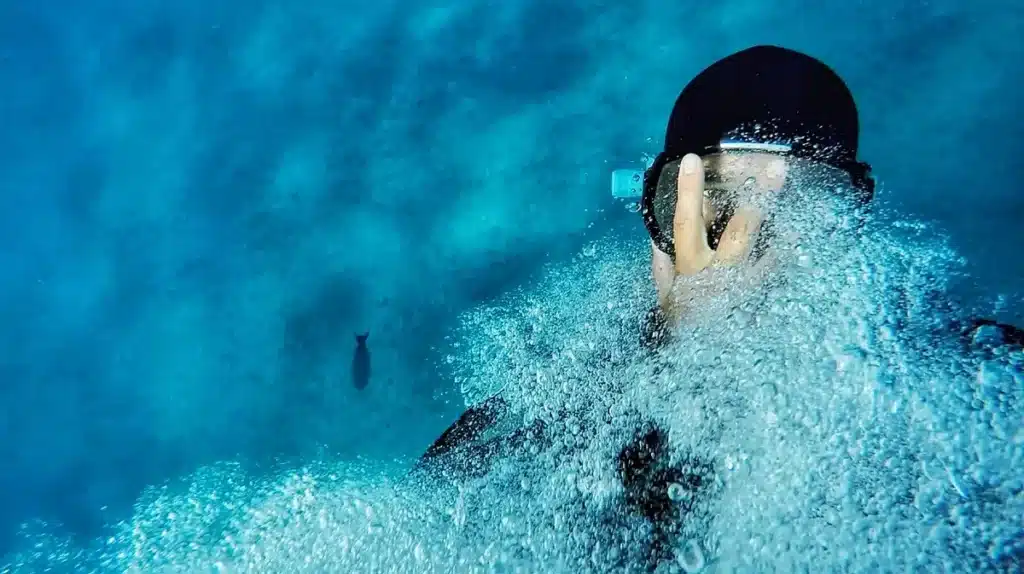
This deserves its own section because trying to reduce air consumption can lead beginners toward the wrong idea.
Do not hold your breath while scuba diving to make your tank last longer.
Continuous breathing is a fundamental scuba safety rule.
You also shouldn’t deliberately take tiny breaths or create long unnatural pauses simply because you want to return to the boat with more air than your buddy.
That’s not efficient diving.
Efficient diving means reducing unnecessary workload so your body naturally requires less gas while you continue breathing normally.
Your goal isn’t to use the smallest amount of air possible.
Your goal is to become a comfortable, controlled and efficient diver.
Should You Calculate Your SAC Rate?

If you want to understand your gas consumption more precisely, you may eventually come across Surface Air Consumption, usually called SAC rate.
SAC gives you a way to compare gas consumption while accounting for depth.
That is useful because simply saying “I used 120 bar” doesn’t tell us much without knowing the cylinder, depth, time and dive conditions.
For recreational divers who simply want to become more comfortable and efficient underwater, you don’t need to turn every dive into a mathematics exercise.
But tracking your consumption across comparable dives can be useful.
And if you become interested in more advanced dive planning, understanding SAC becomes increasingly valuable.
When Should You Pay More Attention to High Air Consumption?
Using more gas during a deep, cold, demanding or current-heavy dive can be understandable.
A sudden unexplained change deserves more attention.
If you are consuming significantly more gas than usual under similar conditions, think about what changed.
And if unusually rapid gas consumption comes together with abnormal breathing difficulty, unusual fatigue, equipment concerns, or feeling physically unwell, don’t simply dismiss it as being “bad with air.”
Tell your dive professional and address the cause before continuing.
Stop Comparing Tanks and Start Comparing Your Own Dives
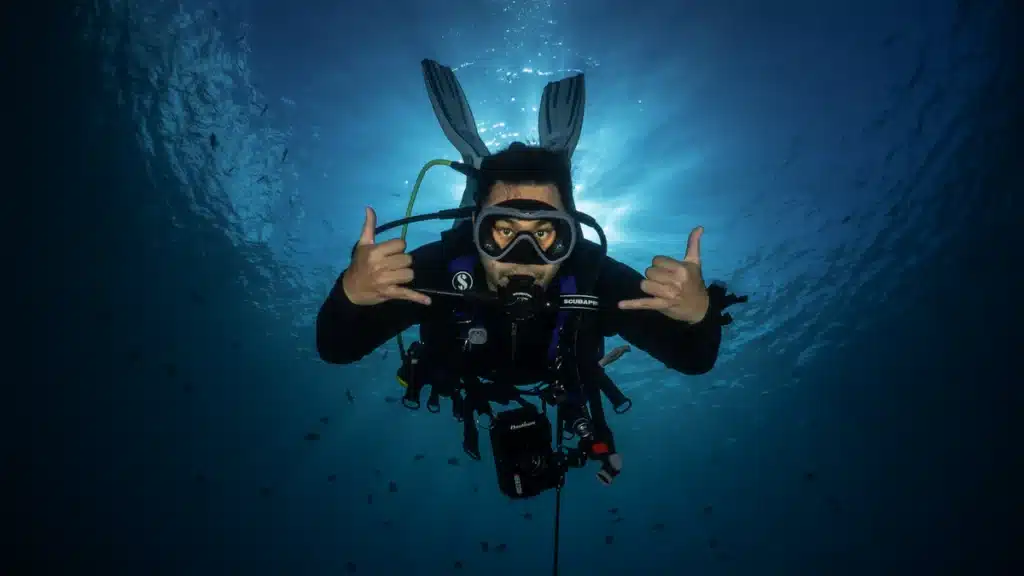
Returning to the boat with more air than everyone else doesn’t make someone the winner of the dive.
Your remaining pressure is information, not a score.
Instead of comparing yourself with another diver, compare yourself with yourself under similar conditions.
Maybe a few months ago you constantly adjusted your BCD, kicked to maintain depth, and surfaced from a familiar dive with 50 bar.
Now you are more relaxed, your buoyancy feels natural, your movements are slower, and under similar conditions you regularly finish with 70 bar.
That’s useful progress.
Better air consumption is usually the result of becoming a more comfortable and efficient diver, not becoming better at forcing yourself to breathe less.
And when you reach that point, something else often happens too.
You stop spending so much of the dive looking at your pressure gauge and start spending more of it looking at what’s around you.
