How Much Weight Do You Actually Need for Scuba Diving?
Ask a diver how much weight they use and you might hear a very confident answer.
“Four kilos.”
“Six kilos.”
“I always use three.”
The number is useful, but it is only part of the answer.
The amount of weight you need for scuba diving can change with your wetsuit, cylinder, equipment, water type and even how relaxed you are in the water. The right amount is not simply based on how much you weigh on land.
What you are looking for is enough weight to descend comfortably and remain in control near the end of the dive, without carrying unnecessary lead. That number can be different from one dive setup to another.
Why Do Scuba Divers Need Weights?

Your body and some of your scuba equipment naturally want to float.
A wetsuit is a good example. Neoprene contains tiny gas bubbles that make the material buoyant. The thicker the wetsuit, the more noticeable that buoyancy can become. Dive weights help counter this positive buoyancy. But the goal isn’t to make yourself heavy enough to sink.
Once underwater, you want to reach neutral buoyancy, where you are neither continuously sinking nor floating toward the surface. Your BCD, breathing, equipment and weighting all work together to help you maintain that position.
This is why simply adding more lead until descending becomes easy isn’t a good way to solve a weighting problem.
So, How Much Weight Do You Need?
There is no single number that works for every diver, but there are formulas that can give you a starting point.
One commonly used guideline is based on a percentage of your body weight. For a diver wearing a 3 mm wetsuit, around 5% of body weight can be used as an initial estimate. With a thicker full wetsuit, the starting percentage may be higher.
For example, a 70 kg diver wearing a 3 mm wetsuit could start with: 70 kg × 5% = 3.5 kg
That doesn’t mean 3.5 kg is automatically the correct amount.
The same 70 kg diver might need a different setup after changing wetsuits, cylinders, BCDs, or moving between fresh and salt water. Body composition also affects natural buoyancy, so two people who weigh exactly the same may still need different amounts of lead.
Think of the formula as a way to answer: “Where should we start?” not: “Exactly how much weight do I need?”
The final answer comes from an in-water weight check with the equipment you will actually use.
What Changes the Amount of Weight You Need?
Several things can change your weighting, sometimes more than beginners expect.
Your Wetsuit

A thicker wetsuit generally creates more positive buoyancy than a thinner one.
That means the weight you used while diving in a thin tropical suit may not work when you change to thicker exposure protection.
The condition of the wetsuit can matter too. Neoprene changes with use and age, so even two suits marked with the same thickness may not feel exactly the same underwater.
Salt Water or Fresh Water

Salt water is denser than fresh water, which makes you more buoyant.
As a result, a setup that works perfectly in a swimming pool or freshwater lake may require additional weight when you move into the ocean.
For someone learning in a pool and then completing open-water dives in Bali, this is an important difference to understand.
Your Cylinder

The cylinder is part of your buoyancy equation too.
Different cylinder materials and sizes have different buoyancy characteristics. The cylinder also changes during the dive because the breathing gas inside it has weight.
As you use that gas, the cylinder becomes lighter.
This is one reason your weighting needs to work not only when you begin the dive with a full cylinder, but also near the end when there is less gas remaining.
Your Other Equipment
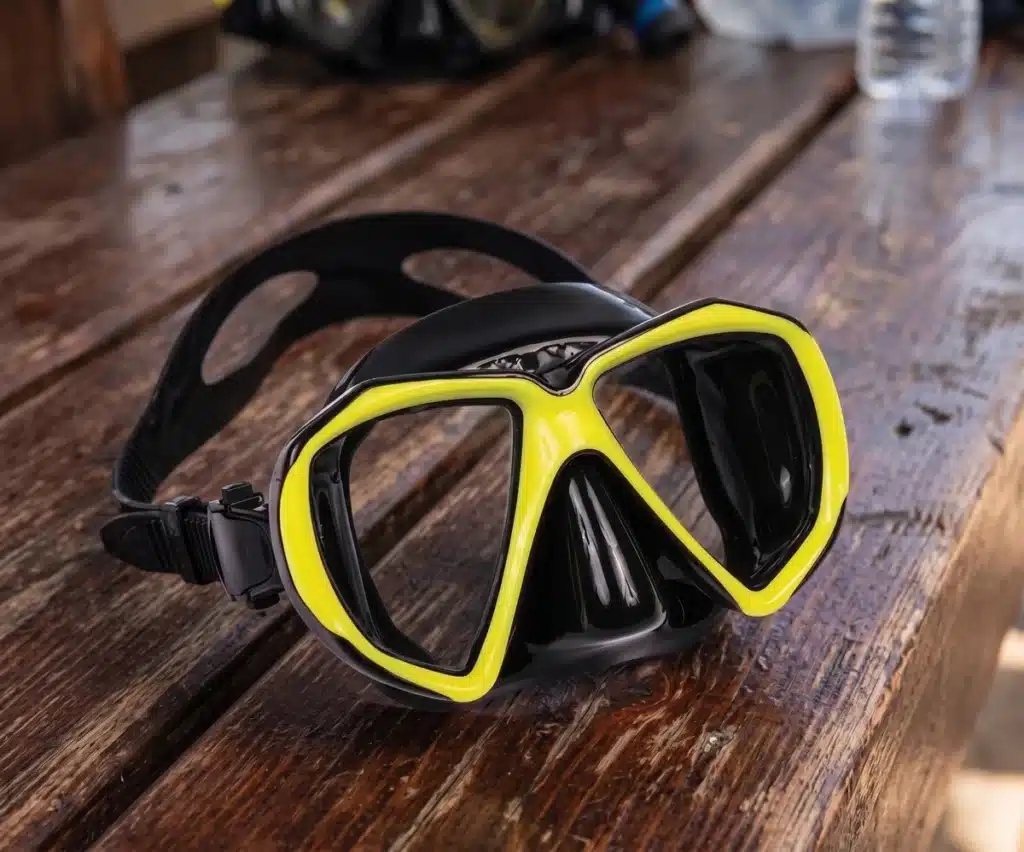
Your BCD, fins, backplate and other equipment can all contribute positive or negative buoyancy.
Change enough equipment and the weight you normally use may no longer be correct.
This is especially relevant when travelling.
You may remember using 4 kg on your last holiday, but if the rental equipment is different this time, 4 kg is a reference, not a rule.
Your Body
Body weight alone doesn’t determine how much lead you need.
Body composition affects natural buoyancy, which is why copying the weight used by someone of a similar size doesn’t necessarily work.
Your breathing can also influence what happens during a weight check. A nervous diver may hold a larger breath or unconsciously keep kicking, making it seem as though they need more lead just to descend.
Sometimes the problem isn’t the weight.
How Do You Know If Your Weight Is Right?
A proper weight check is much more useful than guessing from a chart.
With your diving equipment on and the air released from your BCD, you should be able to check how naturally your body sits in the water while breathing normally.
Your instructor or dive guide can help you make small adjustments until the setup is appropriate. But there is another part that is easy to overlook: Your weighting also needs to work near the end of the dive.
Remember, your cylinder becomes lighter as you breathe gas from it.
A setup that feels fine at the beginning but leaves you fighting to stay below the surface during your safety stop may need adjusting.
That’s why weighting isn’t something you solve once in your life and never think about again.
What Your Dive May Be Telling You
You don’t always need a calculator to notice that something isn’t quite right.
|
What Happens |
What It Might Tell You |
What to Check |
|---|---|---|
|
You struggle to descend |
You may be too light, but technique can also be involved |
BCD air, breathing, movement and weighting |
|
You drop quickly when the BCD is emptied |
You may be carrying too much weight |
Repeat your weight check |
|
You need a lot of air in your BCD at depth |
Excess weight may be part of the problem |
Total weight and equipment |
|
Your legs keep dropping |
This may be a trim issue rather than total weight |
Weight placement and cylinder position |
|
You struggle to stay down near the end of the dive |
Your weighting may not account for the lighter cylinder |
End-of-dive weighting |
|
You are constantly adding and releasing BCD air |
Weighting or buoyancy technique may need work |
Weight, breathing and BCD control |
The important word here is might.
For example, difficulty descending does not automatically prove that you need another kilogram. You could still have air trapped in your BCD. You might be inhaling deeply. You may be moving your fins without realizing it. Look at the whole situation before reaching for another weight.
More Weight Isn’t Always the Answer

This is an easy habit to develop as a beginner. You cannot descend easily, so someone adds another weight.
Problem solved. At least at the surface.
Once you reach depth, that extra lead still has to be compensated for. You add more air to your BCD to become neutrally buoyant. As depth changes, the volume of that air changes too, which means you may find yourself making more buoyancy adjustments.
Extra weight can also affect your position in the water.
Instead of moving horizontally, you may end up in a more upright position and need to kick more to move forward. More movement means more work, and more work can contribute to higher gas consumption.
This is one reason using more air than your buddy isn’t always just about how you breathe. Weighting, trim and unnecessary movement can all be part of the same problem.
Proper weighting makes the rest of your diving easier.
But Using Too Little Weight Isn’t the Goal Either

Once divers learn that overweighting is a problem, it is easy to go too far in the opposite direction.
Using less lead is not a competition. You haven’t become a better diver simply because you can say you only use 2 kg. If you are too light to maintain a controlled shallow stop near the end of the dive, your setup isn’t correct for that dive.
The goal is not: as little weight as possible. It is: the appropriate amount of weight for controlled buoyancy throughout the dive.
Sometimes that means adding weight. Sometimes it means removing it. Neither is a failure.
Weight Placement Matters Too
Imagine you have found the correct total amount of lead, but your feet still keep dropping. Adding or removing weight may not solve it.
The issue could be where the weight is positioned.
This is where weighting and trim become two different things. Total weight helps determine whether you float or sink. Weight distribution influences how your body sits in the water.
Depending on your equipment, weight might be carried around the waist, in integrated BCD pockets or in trim pockets positioned elsewhere on the setup.
Small changes in placement can make a noticeable difference to your underwater position.
The aim for most recreational diving is a comfortable, streamlined position that doesn’t require you to constantly kick just to stay where you want to be.
Good Weighting Should Make Diving Feel Less Busy
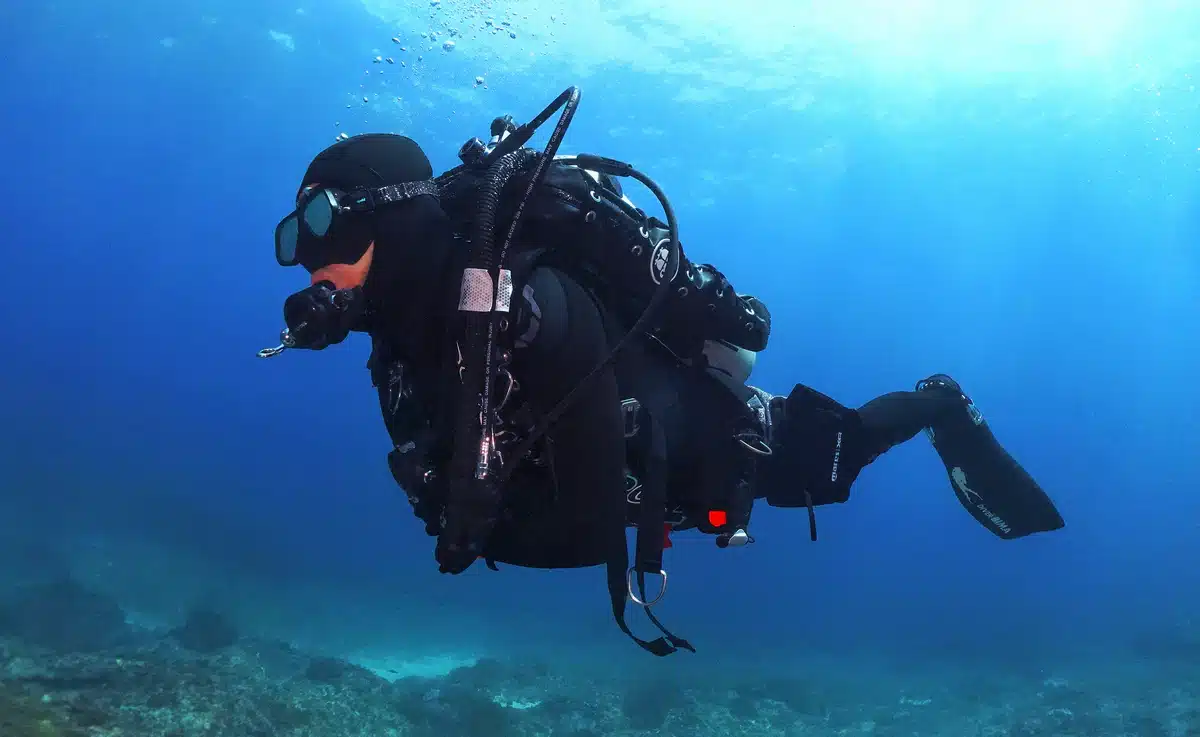
One sign that your weighting and buoyancy are improving is that you start doing less.
You can simply settle into the dive.
That doesn’t happen because you discovered a magic number of kilograms. It comes from finding a suitable starting weight, checking it properly and gradually understanding how your breathing, BCD, trim and equipment work together.