


Morning vs Afternoon vs Night Diving, Which Experience Is Right for You?
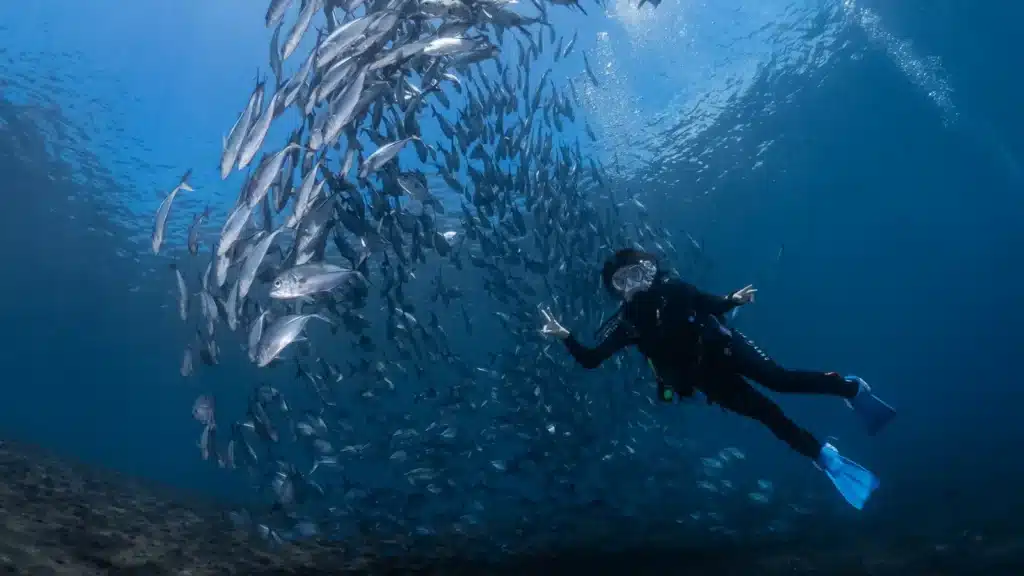
One of the most common questions new divers ask is, “What is the best time of day to go scuba diving?“
The answer is not as straightforward as many people expect.
The underwater world changes throughout the day. As sunlight shifts, tides move, and marine life follows its natural routines, the same dive site can offer a completely different experience from morning to afternoon, and another one after sunset.
That is why many experienced divers are happy to return to the same location more than once. They are not simply revisiting the same reef. They are discovering how it changes over the course of a day.
Instead of looking for the “best” time to dive, it is more useful to understand what makes each part of the day unique. Whether you prefer wide underwater views, changing reef activity, or the excitement of exploring after dark, each dive offers something different.
Why the Underwater World Changes Throughout the Day
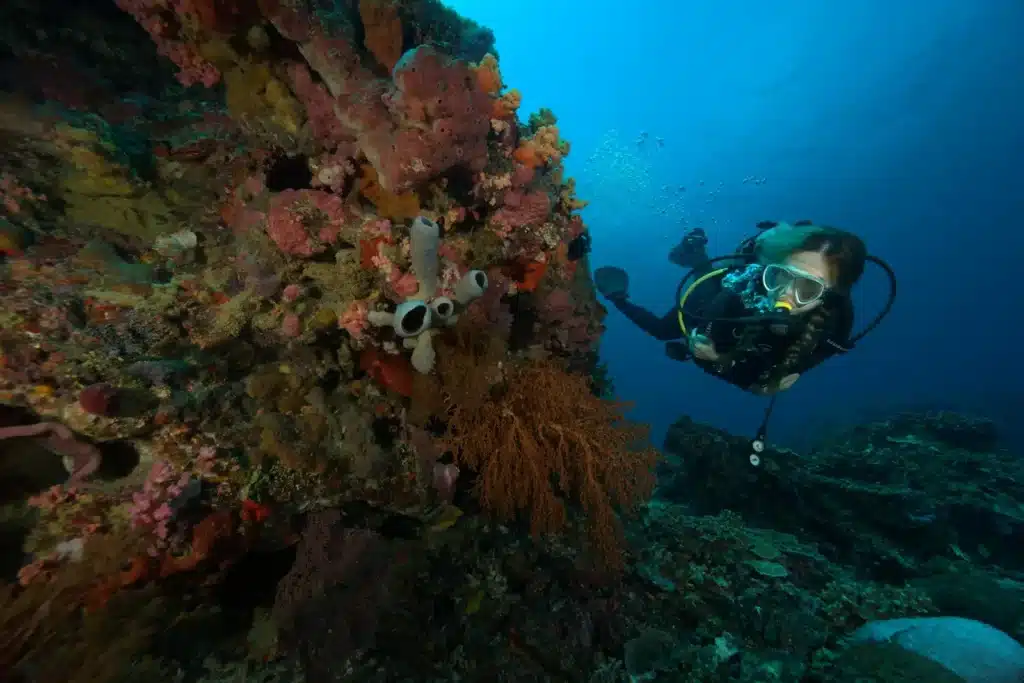
The underwater landscape may look the same each time you dive, but the experience rarely is. Changes in sunlight, tides, currents, and marine life can make every dive feel different, even at the same location.
Several natural factors influence what divers experience throughout the day.
Sunlight Changes More Than Visibility
Light shapes your entire diving experience.
- Morning dives are bright and colorful, making it easy to enjoy wide reef views and natural underwater scenery.
- By the afternoon, changing sunlight creates new shadows and highlights, giving familiar dive sites a different character.
- At night, your dive light reveals only a small part of the reef at a time, turning your attention from wide landscapes to fascinating details and nocturnal marine life.
Tides and Currents Never Stay the Same
No two dives feel exactly the same because tides and currents are constantly changing.
On some dives, you’ll enjoy calm water and an easy swim. On others, stronger currents may attract more marine life as fish gather to feed.
That’s why experienced dive guides check local conditions before every dive. Yesterday’s plan may not be the best choice today.
Weather Plays a Bigger Role Than Many Divers Expect
Even on clear days, weather continues to shape underwater conditions.
Wind can create surface waves that affect entry and exit points. Rain may influence visibility in certain coastal areas, while offshore sites may remain largely unchanged. Cloud cover can also alter how much natural light reaches the reef.
Because several factors work together, predicting underwater conditions is never as simple as checking a weather forecast.
Marine Life Changes Throughout the Day
Morning often brings active reef fish, sea turtles, and schools of fish searching for food. As the day goes on, some species become harder to spot, while others begin to appear.
After sunset, the underwater world changes again. Octopuses, crabs, shrimp, and many other nocturnal creatures leave their hiding places, making a night dive feel like exploring a completely different reef.
Morning Diving Starting the Day Underwater
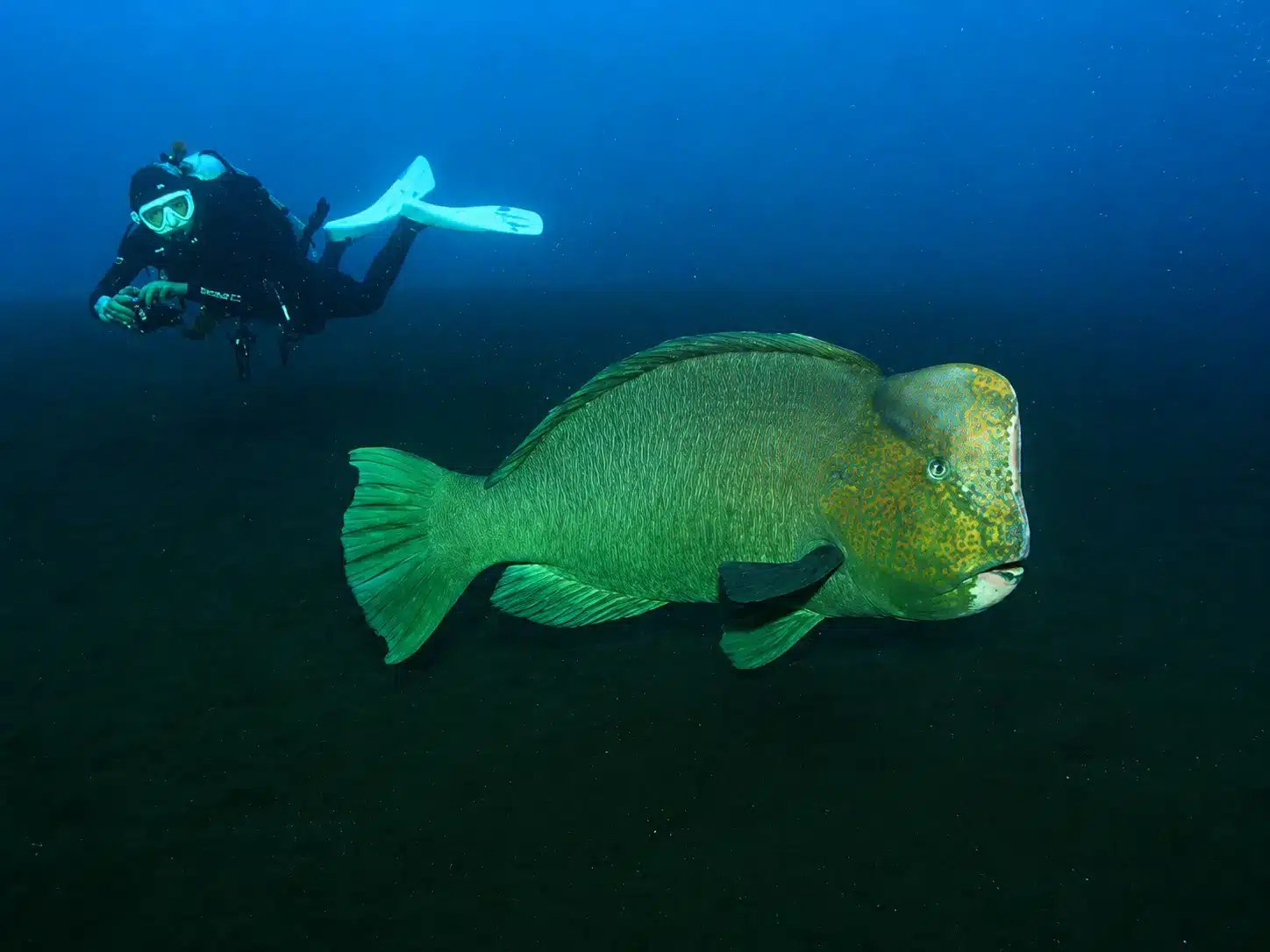
For many dive centers around the world, the first boats leave shortly after sunrise. While logistics play a role, there are also practical reasons why morning dives remain popular with both beginners and experienced divers.
The ocean often feels calm and inviting during the early hours of the day. As the sun rises, natural light gradually reveals coral reefs, schools of fish, and underwater landscapes with excellent clarity.
What Morning Diving Often Feels Like
Morning dives are often calm, bright, and relaxing. Natural sunlight brings out the colors of the reef, visibility is often at its best, and the quieter atmosphere makes it easy to slow down and enjoy the underwater scenery. It’s also one of the reasons many underwater photographers prefer diving early in the day.
Marine Life During the Morning
Depending on the location, divers may observe schools of reef fish feeding above coral gardens, cleaner fish working at cleaning stations, and turtles resting before beginning their search for food.
Predators such as trevallies or jacks may also become more active during the cooler hours of the morning, while smaller reef inhabitants move between coral formations as sunlight gradually reaches the reef.
Of course, wildlife sightings can never be guaranteed. Every dive is different, which is part of what makes each underwater experience memorable.
Who Might Enjoy Morning Diving Most?
Morning diving is often a comfortable choice for a wide range of divers, especially those who enjoy taking their time to observe the underwater environment.
It may be particularly suitable for:
- First time divers looking for a relaxed introduction to scuba diving.
- Student divers completing entry level certification courses.
- Underwater photographers who want to make the most of natural light.
- Divers who enjoy calm, scenic reef exploration.
- Travelers planning to leave the afternoon free for other activities.
That said, choosing a morning dive does not mean you will have a better experience than later in the day. It simply offers a different perspective of the ocean, one that many divers find peaceful, colorful, and full of life as the underwater world begins another day.
Afternoon Diving A Different Perspective of the Same Reef

It is easy to assume that morning dives offer the best conditions and that afternoon dives are simply the second option. In reality, that is not how the ocean works.
As the day progresses, the underwater environment continues to evolve. The position of the sun changes, water movement may shift with the tides, and marine life follows its own natural rhythm. The result is not necessarily a better or worse dive, but often a noticeably different one.
Many experienced divers enjoy returning to the same dive site in the afternoon because they know it can reveal a different side of the reef.
How the Underwater Environment Changes
By the afternoon, the same dive site can feel surprisingly different. Changing sunlight creates new shadows and highlights across the reef, while tides and currents may influence visibility and marine life activity. That’s why dive conditions are always assessed on the day, not simply by the time on the clock.
Marine Life Continues Its Daily Routine
Some fish that were actively feeding earlier in the day begin moving toward sheltered areas, while other species become more noticeable as they venture farther from their hiding places.
Depending on the location, divers may notice:
- Schools of reef fish moving together across open water.
- Moray eels becoming more visible from their shelters.
- Rays resting on sandy bottoms.
- Reef predators patrolling coral edges.
- Cleaner stations remaining busy as fish continue their daily interactions.
These observations vary from dive to dive, which is why experienced divers often say that every dive tells a different story.
Afternoon Light Creates a Different Experience
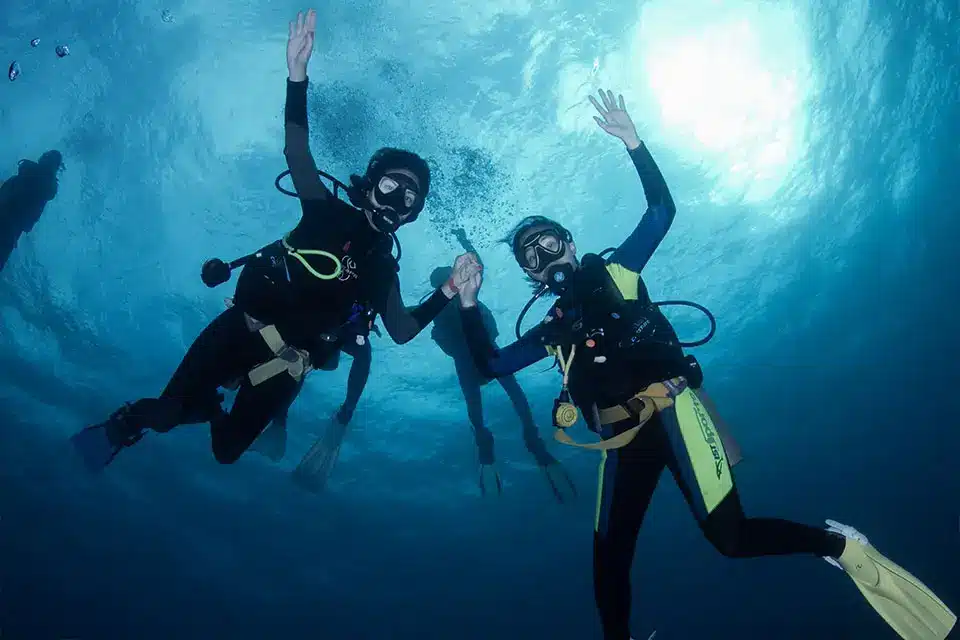
During the afternoon, sunlight can create beautiful contrasts across the reef. Soft beams of light filtering through the water may highlight coral formations in ways that were not visible earlier in the day.
For underwater photographers, this changing light opens creative opportunities. Instead of aiming for bright, evenly lit scenes, afternoon dives often allow for more dramatic compositions using shadows, silhouettes, and directional light.
Even divers who never carry a camera often notice that familiar dive sites simply feel different under changing natural light.
Who Might Enjoy Afternoon Diving?
They are often enjoyed by:
- Certified divers exploring multiple dive sites in one trip.
- Underwater photographers experimenting with different lighting.
- Divers returning to a favorite reef for another perspective.
- Travelers who prefer a later start to the day.
- Anyone curious about how marine life changes as daylight progresses.
Rather than comparing morning and afternoon dives, many divers find that experiencing both provides a much richer understanding of the underwater world.
Night Diving When the Reef Comes to Life in a Different Way
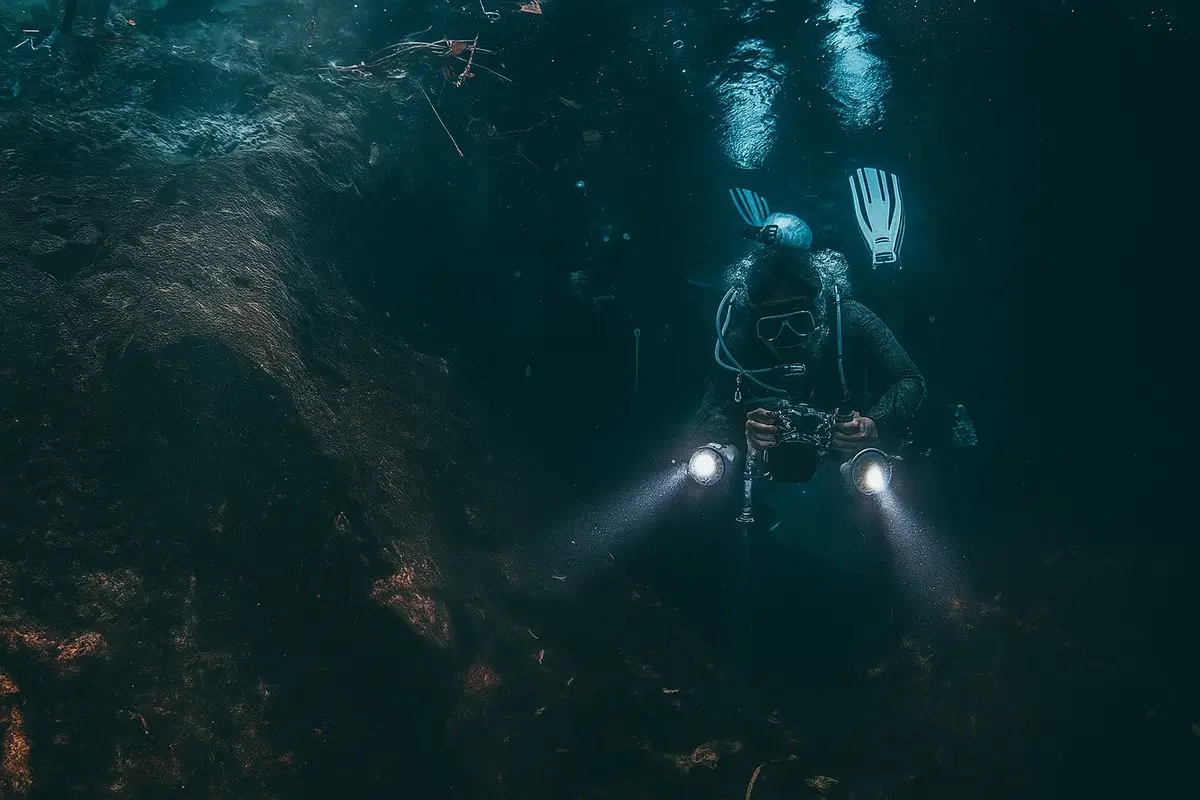
After sunset, the reef changes completely. Many daytime species disappear, while nocturnal marine life becomes active. The dive site may be the same, but what you see underwater can be entirely different.
Diving After Sunset Feels Surprisingly Peaceful
People who have never experienced a night dive often imagine darkness, limited visibility, and uncertainty.
In reality, many describe it as one of the calmest dives they have ever done.
Each diver carries a dive light that illuminates a small section of the reef ahead. Instead of trying to observe everything at once, attention naturally slows down. Divers spend more time watching details, noticing movement, and appreciating small creatures that are easily overlooked during the day.
Communication also becomes simpler and more focused, with torch signals complementing standard hand signals.
A Different Community of Marine Life
One of the biggest reasons divers choose night diving is the opportunity to encounter species that are rarely seen during daylight.
Depending on the dive site and local conditions, night dives may reveal:
- Octopuses leaving their dens to hunt.
- Crabs and shrimp becoming active across the reef.
- Lobsters searching for food.
- Sleeping parrotfish protected inside their mucus cocoons.
- Basket stars extending their arms to feed.
- Seahorses becoming easier to spot at certain locations.
- Spanish dancers gracefully swimming through the water.
- Bioluminescent organisms producing tiny flashes of light when disturbed.
Night Diving Is About Observation, Not Speed
Many divers expect night diving to be more adventurous because of the darkness.
In practice, the opposite is often true.
Night dives naturally move at a slower pace. Instead of covering more distance, divers spend more time observing the reef, often spotting tiny nudibranchs, shrimp, crabs, and other well-camouflaged creatures that are easy to miss during the day. Sometimes, the smallest marine life becomes the most memorable part of the dive.
Who Should Consider a Night Dive?
Night diving can be an unforgettable experience for divers who feel comfortable with their basic diving skills and enjoy observing marine life.
It may be especially rewarding for:
- Divers interested in marine behavior.
- Underwater photographers looking for unique subjects.
- Repeat visitors who want to experience familiar dive sites differently.
- Divers seeking something beyond traditional daytime dives.
- Anyone curious about how reefs change after sunset.
One of the most memorable aspects of night diving is not the darkness itself. It is realizing that the reef never truly goes to sleep. It simply changes shifts, revealing a hidden world that remains almost invisible during the day.
Comparing Morning, Afternoon, and Night Diving
Although each experience is unique, the following comparison can help illustrate how they typically differ.
|
Feature |
Morning |
Afternoon |
|---|---|---|
|
Natural light |
Bright and even |
Softer with changing angles |
|
Underwater atmosphere |
Fresh and peaceful |
Relaxed and constantly changing |
|
Marine life |
Active daytime species |
Mixed daytime activity |
|
Photography |
Excellent natural colors |
Creative lighting opportunities |
|
Pace of the dive |
Comfortable and relaxed |
Leisurely exploration |
|
Ideal for |
Beginners, courses, sightseeing |
Repeat dives, photographers, flexible schedules |
Rather than viewing one as better than another, think of them as three different ways to experience the same underwater environment.
Which Diving Experience Is Right for You?
The answer depends less on your certification level and more on what you hope to experience underwater.
Each reveals a different chapter of the same underwater story.
