


What Is a Thermocline in Scuba Diving?
You start your dive in warm, comfortable water. Everything feels normal until you descend a little deeper and suddenly notice the temperature dropping. The water hasn’t changed color, and you may not see anything unusual around you. But you can definitely feel the difference.
You’ve probably just crossed a thermocline.
Thermoclines are common in many diving destinations, including parts of Bali. Understanding what they are can help you prepare for changing underwater conditions and stay comfortable throughout your dive.
What Is a Thermocline?
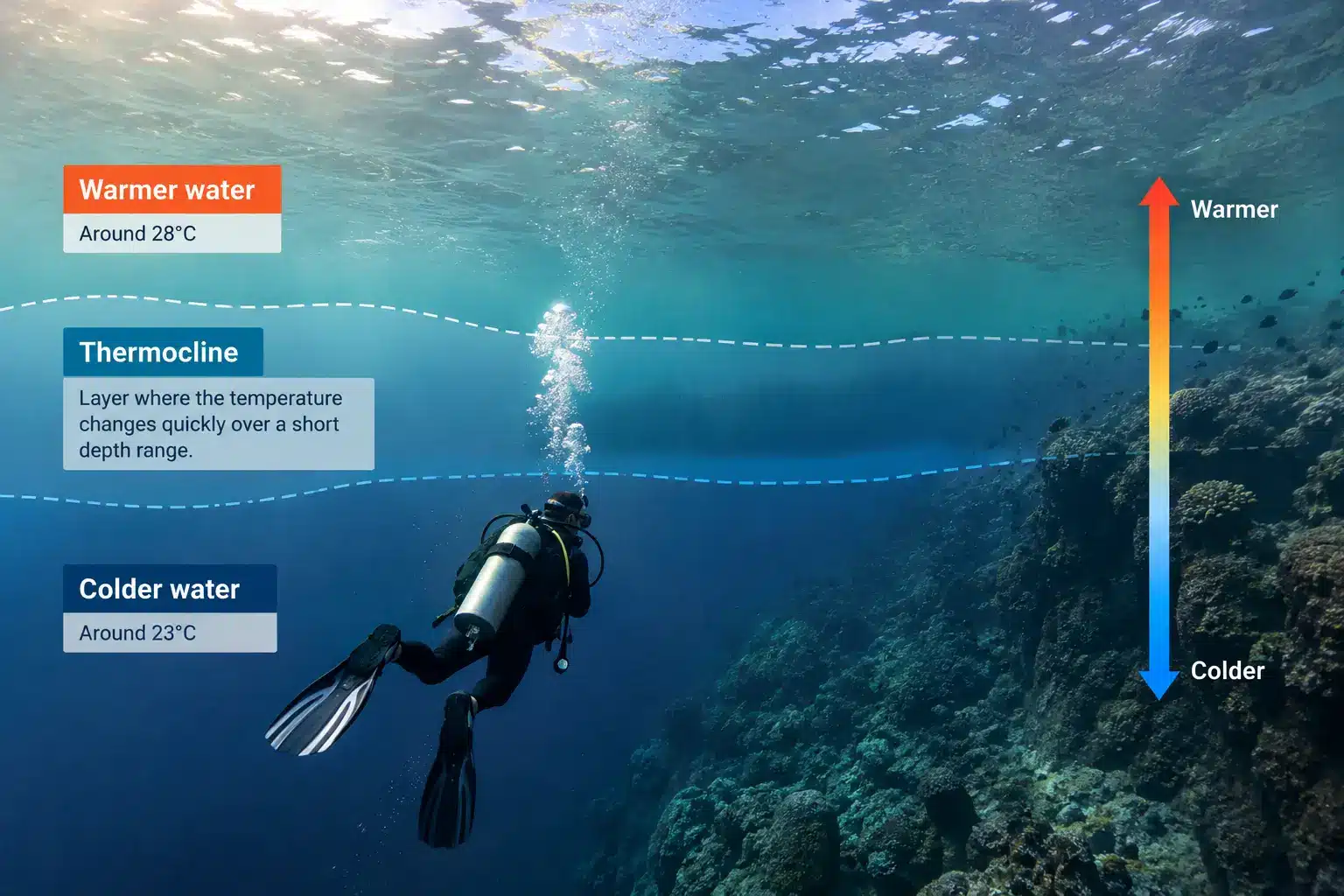
A thermocline is a layer of water where the temperature changes relatively quickly over a short change in depth.
The water above this layer is usually warmer, while the water below is colder. For example, you might begin a dive in water that’s 28°C, then descend into a layer where the temperature drops to 23°C. The change can feel surprisingly sudden, even though you’ve only descended a few metres.
Not every thermocline produces such a large difference. Some are subtle, while others are noticeable enough to make you stop and check your dive computer. A thermocline isn’t a physical barrier. You can swim through it normally, but you’ll feel the temperature difference as you move between the layers.
Why Do Thermoclines Form?
The ocean doesn’t always have the same temperature from the surface to the seabed. Sunlight warms the upper layers of water. Deeper water receives much less sunlight and can remain cooler. Because warmer water is generally less dense than colder water, these layers can remain separated when conditions allow.
The area where the temperature changes most rapidly is called the thermocline.
However, sunlight isn’t the only factor. Ocean currents, wind, tides, seasonal changes, and underwater topography can all influence how temperature layers develop and move.
This means the depth of a thermocline isn’t always the same, even at a dive site you’ve visited before.
What Does a Thermocline Feel Like Underwater?
Most divers first notice a thermocline because of the temperature. You might feel warm around your head and shoulders, then suddenly experience colder water as you descend. Sometimes the change happens gradually. Other times, it feels like swimming into a different body of water.
You may also notice:
A thermocline doesn’t automatically mean poor visibility. Temperature and visibility can change independently.
Where Can You Experience Thermoclines in Bali?
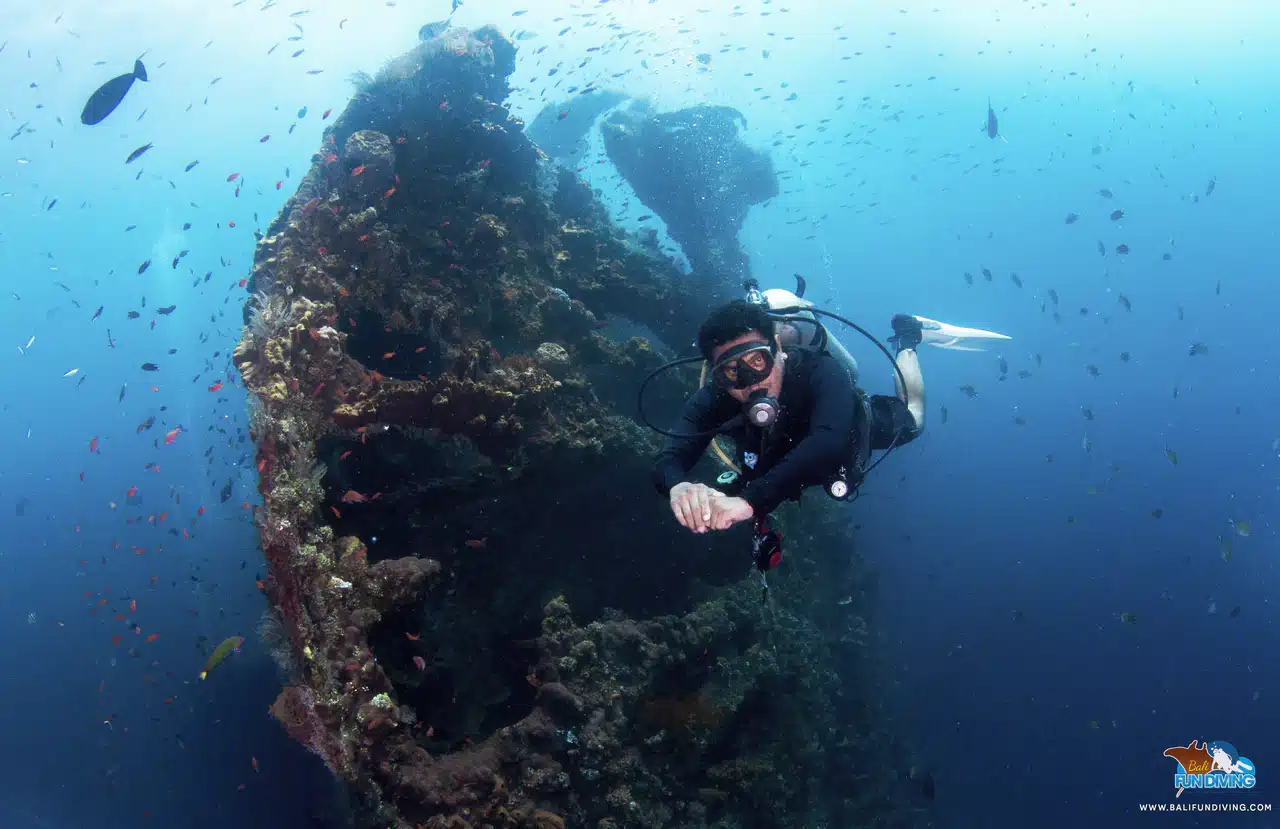
Bali has a variety of underwater environments, and water temperature can differ considerably between dive destinations. One area particularly known for cooler underwater conditions is Nusa Penida.
Nusa Penida
Around Nusa Penida, ocean currents and seasonal upwelling can bring colder, deeper water into areas where divers are exploring. You might begin a dive in relatively warm water and encounter a much colder layer at depth.
This is particularly relevant during the cooler-water season, generally around July to October, although conditions vary from year to year.
Sites such as Crystal Bay are known for temperature changes, but the depth and intensity of a thermocline cannot be predicted simply from the dive site’s name. Cold water is also associated with the seasonal appearance of ocean sunfish, commonly called mola mola, around Nusa Penida. However, encountering a thermocline doesn’t mean you’ll see one.
Other Bali Dive Sites
Temperature layers can also occur around other Bali dive sites, including Tulamben, Padang Bai, and Amed. However, their frequency and intensity depend on local conditions.
It’s better to ask your dive guide about the expected water temperature and current conditions rather than assume every dive will have a thermocline.
Is a Thermocline Dangerous for Scuba Divers?
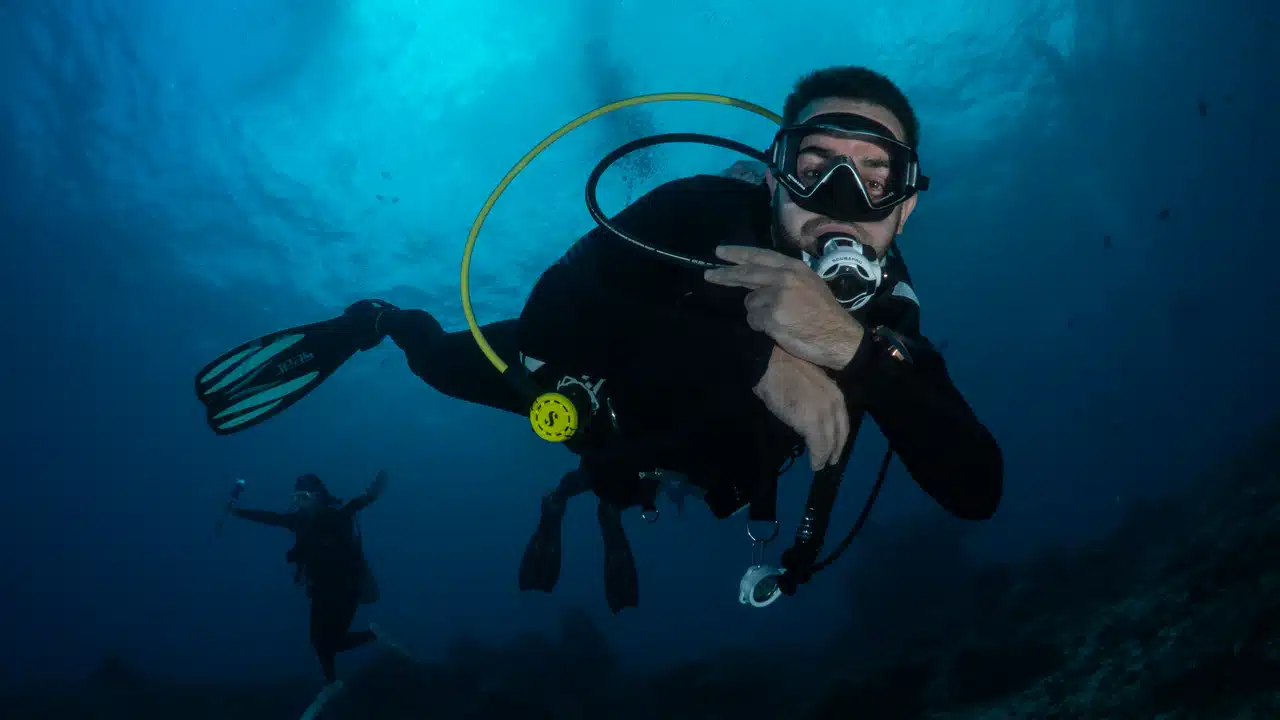
A thermocline itself isn’t necessarily dangerous.
The main concern is how a sudden temperature change affects your comfort, breathing, and ability to manage the dive. Cold water can cause an involuntary gasp or faster breathing, especially when the change is unexpected. If you become uncomfortable, you may also use more air than usual.
Prolonged exposure to cold water can increase the risk of excessive heat loss, particularly when your wetsuit isn’t suitable for the conditions. Temperature changes can also be accompanied by other environmental changes, such as currents or reduced visibility, although a thermocline does not cause these conditions by itself.
The important thing is to remain aware of how you’re feeling and communicate with your buddy or dive guide. If you’re getting too cold, there’s no reason to push deeper or continue the dive simply to follow the original plan.
How to Prepare for a Thermocline
You don’t need special training just to swim through a thermocline. However, a few preparations can make the experience more comfortable.
1. Choose the Right Exposure Protection
Don’t choose your wetsuit based only on the temperature at the surface. If the water is warm near the boat but much colder at depth, a thin wetsuit might not provide enough protection.
Ask your dive center about the expected temperature at your planned diving depth.
2. Check Your Dive Computer
Many dive computers display water temperature. Pay attention to changes during your descent, particularly when diving somewhere known for colder water.
Remember that your computer may take some time to register a temperature change.
3. Stay Within Your Comfort Level
If the water becomes unexpectedly cold, slow down, maintain your buoyancy, and assess how you feel. Let your buddy or guide know if you’re uncomfortable. Depending on the dive plan and conditions, moving to a shallower, warmer depth may help. Any depth change should be controlled and coordinated with your buddy or guide.
4. Plan for the Coldest Expected Temperature
Before entering the water, ask about conditions at depth, not just at the surface. This is particularly important for deeper dives around Nusa Penida. Your profesional dive guide can help you understand what to expect and whether the planned site is appropriate for your experience and equipment.
What to Remember About Thermoclines
A thermocline is simply part of the ocean’s changing environment. You might cross one without giving it much thought, or experience a temperature drop that makes you appreciate your wetsuit a little more.
For divers exploring Bali, especially around Nusa Penida, understanding thermoclines helps explain why the water can feel very different at depth compared with the surface.
Before your dive, ask about the expected temperature, choose suitable exposure protection, and stay aware of your comfort underwater. The ocean doesn’t always stay the same from the surface to the bottom, and knowing what to expect makes those changes easier to manage.
Share this Article