


Why Does My Scuba Mask Keep Filling With Water?
A scuba mask usually keeps filling with water because the silicone skirt is not sealing evenly against your face. Hair, a folded skirt, an overtightened strap or normal facial movement can leave a small gap. Start by checking the seal rather than pulling the strap tighter.
Start with a simple reset at the surface: clear hair from the seal, flatten the skirt and adjust the strap until the mask sits securely without squeezing. Then test it with your regulator in your mouth before you descend.
This guide covers conventional scuba masks used with a separate regulator. Full-face systems require their own equipment-specific training and procedures.
Find the Likely Cause of Your Mask Leak
Use this table to narrow down the problem. These are clues, rather than a diagnosis: water can collect at the bottom even when it entered somewhere else. Make fitting adjustments at the surface or in a controlled training setting.
|
When water gets in |
What to check |
What to try first |
|---|---|---|
|
It leaks from the start |
Hair, hood edge or a folded skirt |
Lift and reseat the skirt with the sealing edge clear. |
|
It gets worse as you tighten it |
An overtightened strap distorting the skirt |
Loosen slightly and refit; aim for secure, comfortable contact. |
|
It leaks when you smile or bite down |
Cheek movement or regulator pull |
Relax your jaw and check the fit with your regulator in place. |
|
It seeps in below your nose |
Moustache hair or lower-skirt fit |
Check the upper-lip seal and try another mask shape if needed. |
|
It shifts when you turn your head |
Strap position, hose pull or poor fit |
Check strap placement and ask for help checking hose routing. |
|
It keeps refilling after you clear it |
A persistent gap, damaged skirt or unsuitable fit |
Inspect the mask and try a different model before the next dive. |
Three Checks Before You Tighten the Strap Again
Clear the Seal
Reset the Fit
Test One Change
Why a Tighter Strap Can Make the Leak Worse
The soft skirt needs to follow the shape of your face. Pulling the strap very tight can flatten or distort that skirt, creating a leak instead of closing one. It can also leave uncomfortable pressure on your forehead or nose.
Loosen the strap, position the mask naturally and tighten it only enough to hold it in place. Keep the strap flat across the broad back of your head, where it stays stable, rather than dragging it down onto your neck.
Useful test: if each extra pull makes the leak worse, stop tightening. Reset the mask and check the seal. A mask that only seems usable when it is painfully tight needs another fitting check.
Check What Is Trapped Under the Silicone Skirt
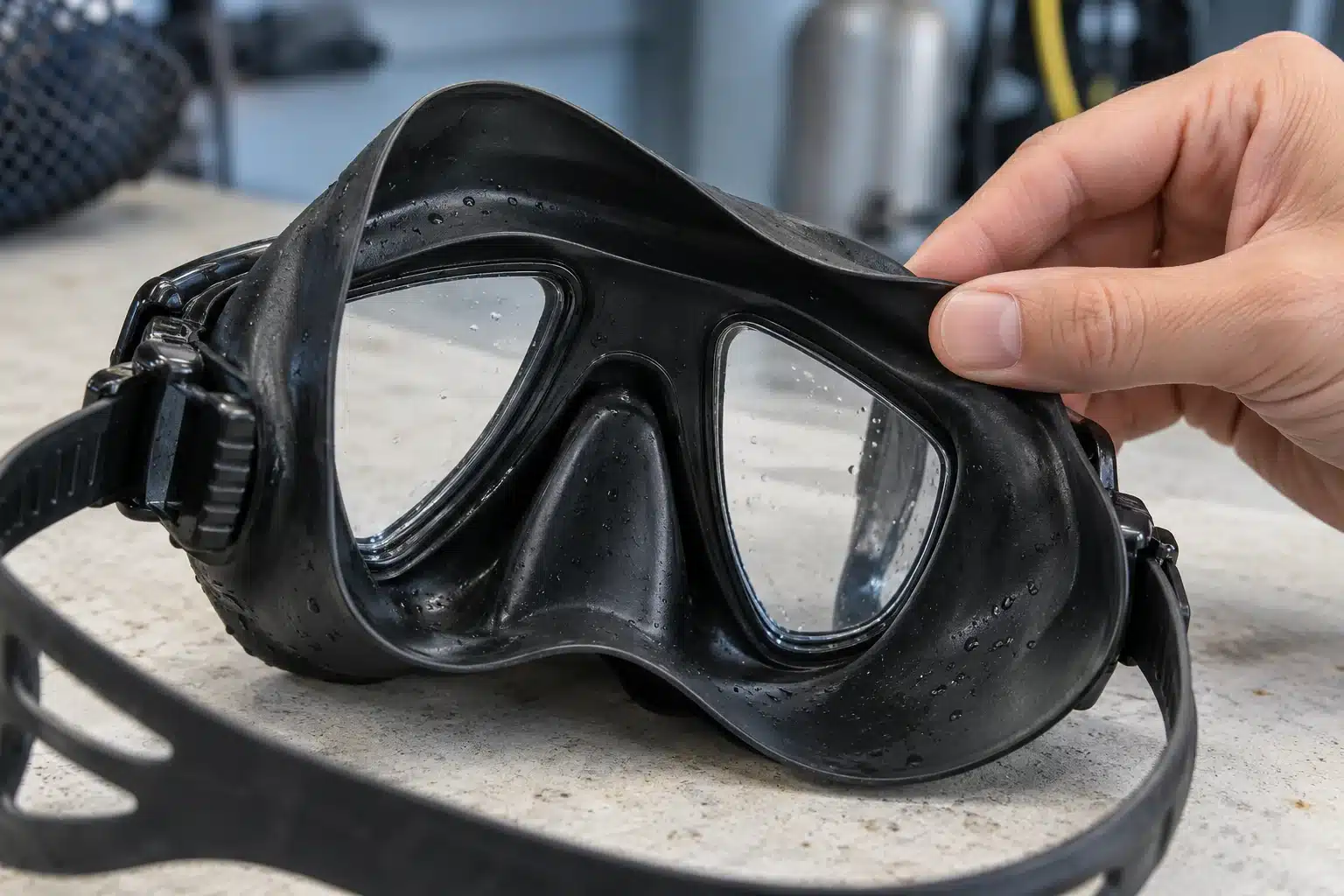
Check that the silicone edge lies flat, with no folds, hair or debris crossing the seal. AI-generated illustration.
Even a single strand of hair can cross the sealing edge and let water seep in. Sweep hair away from your forehead and temples before putting the mask on. If you wear a hood, check that its edge is outside the skirt rather than tucked underneath it.
Run a fingertip gently around the outside of the skirt to find a folded edge. Pay attention to the corners beside your nose and the lower edge above your lip. Rinse away sand or debris before refitting; do not rub grit across the lenses.
Does It Leak Only When You Smile or Use Your Regulator?
Your face changes shape when you smile, talk or clench your jaw. A mask may seal on a relaxed face but open a small gap when your cheeks move. That does not necessarily mean the mask is broken.
Test the fit with your own regulator or the rental regulator you will actually use. Rest your mouth naturally around the mouthpiece. If the second stage pulls to one side, ask your instructor or guide to check the setup rather than biting harder to hold it straight.
Can a Moustache or Beard Cause a Mask Leak?
Hair across the upper lip can interrupt the lower seal. A beard elsewhere on the face matters less than the hair directly beneath the skirt.
Before reaching for a product, check where the mask actually contacts your upper lip. Trying a different skirt shape or carefully trimming the small strip of hair under the nose may help. There is no need to assume that every diver must shave.
Avoid improvised sealants or products that the mask manufacturer has not approved. A lubricant cannot reliably fix a mask that does not suit your face.
How to Check Mask Fit Before the Next Dive
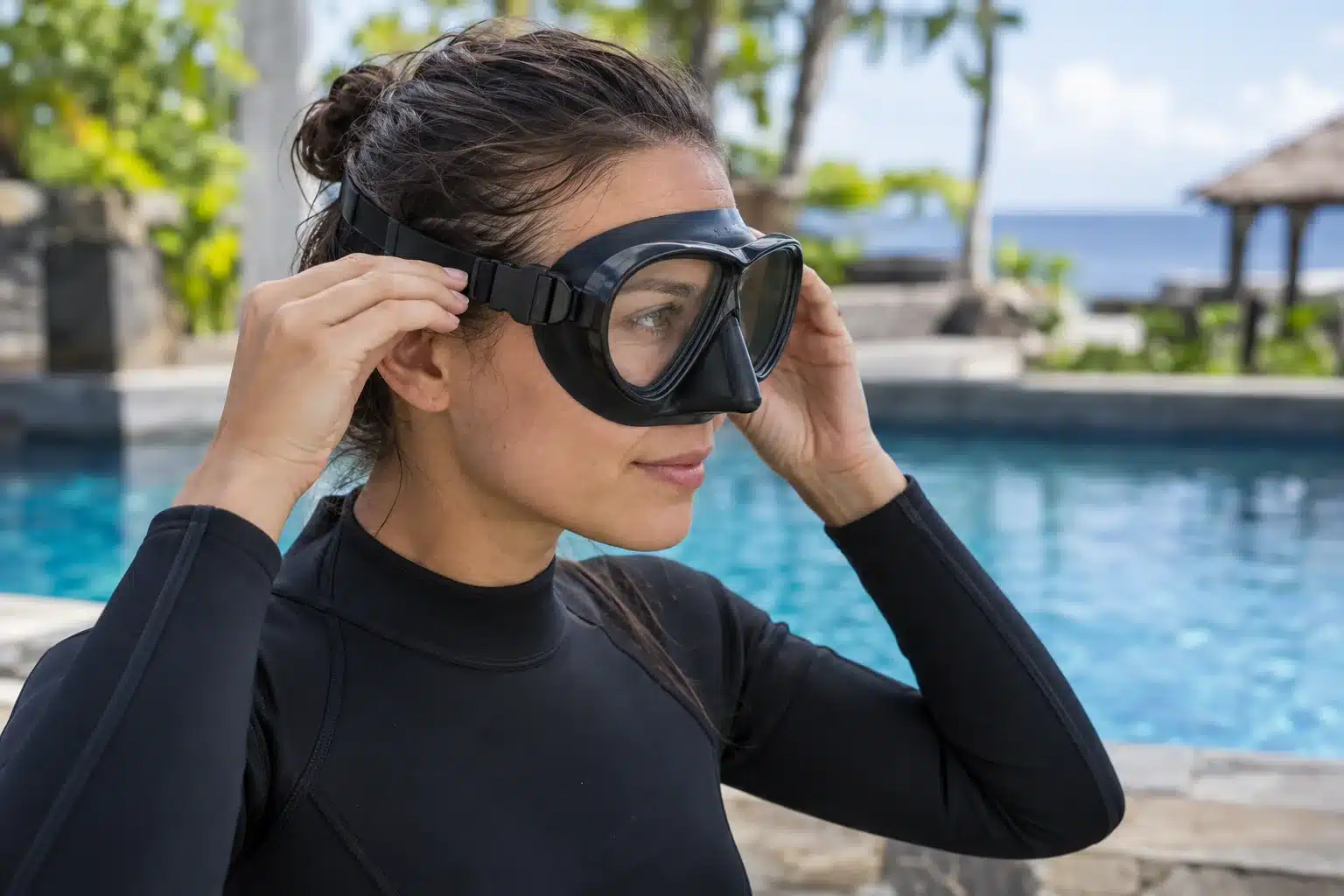
Check the strap position at the surface, then repeat the fit check with your regulator in place. AI-generated illustration.
A quick dry fit is a useful starting check, but it cannot prove the mask will stay dry underwater. Use the whole sequence:
When Another Mask Shape Is the Better Fix
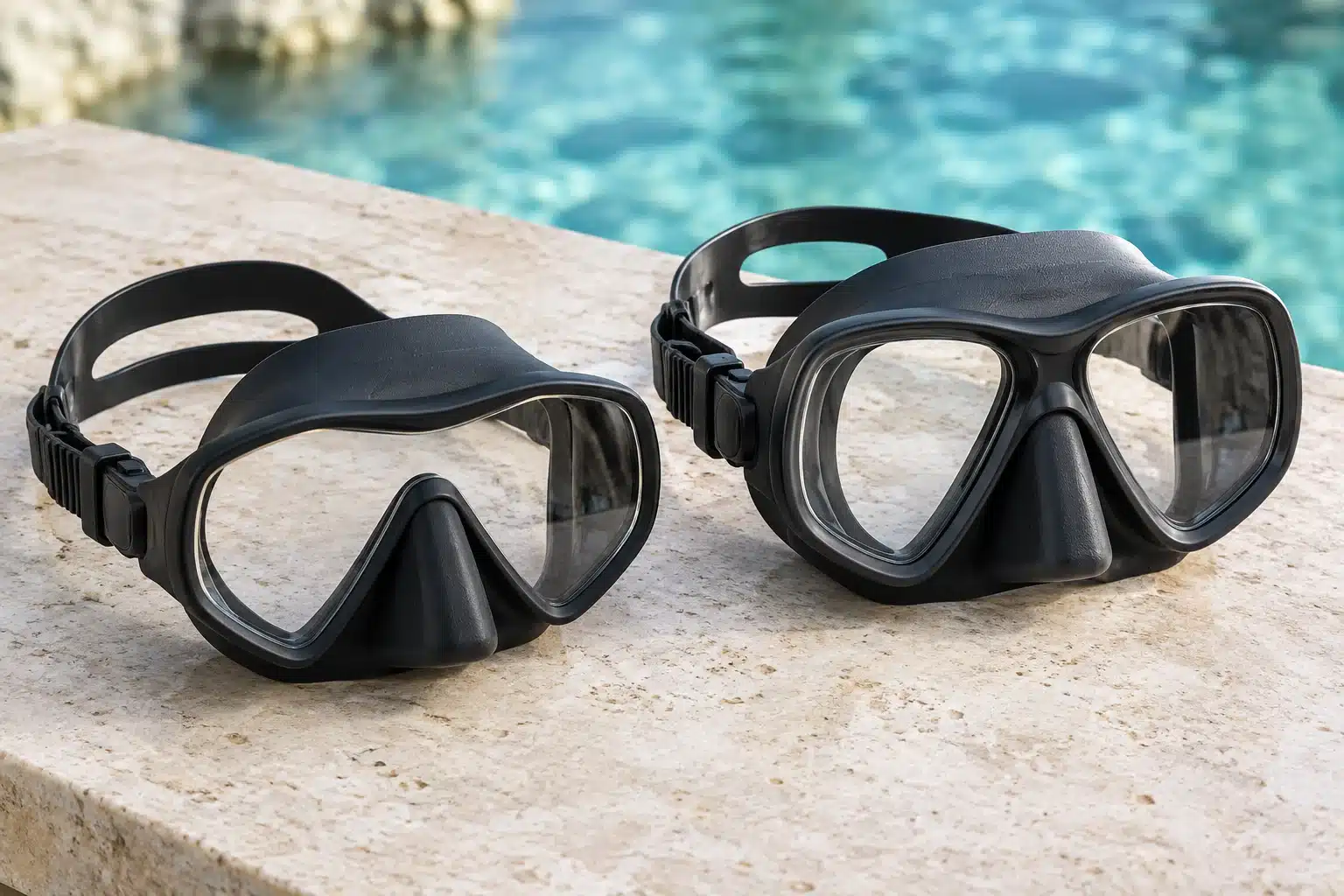
Different shapes seal differently on each face. Compare comfort and fit with your regulator in place. AI-generated illustration.
If the skirt is clear, the strap is comfortable and the mask still leaks during normal head movement, try a different model. Change one thing at a time so you can tell whether the improvement comes from the adjustment or the mask itself.
What to Do If Water Enters During a Dive
Keep your regulator in your mouth and continue breathing normally. Signal your buddy or guide, maintain control of your depth and use the mask-clearing technique you learned in training. Avoid becoming so focused on the mask that you stop watching your buoyancy or surroundings.
For a conventional scuba mask, clearing generally involves holding the upper part of the mask against your face and exhaling gently through your nose while positioning your head as taught, so air pushes water out at the lower skirt. Ask your instructor to check the technique if it is not working; lifting the entire mask away can simply let more water in.
Clearing removes the water already inside. It does not repair the gap that let it enter. If the mask repeatedly floods, your vision is poor or you cannot stay comfortable, get your buddy or guide’s help and end the dive with a controlled ascent following your training. Do not rush to the surface.
If water around your nose makes you anxious, arrange supported practice in a pool or confined water. Our article on handling panic underwater discusses why early communication matters. A blog can reinforce a skill, but hands-on practice is what makes it familiar.
Nose Breathing, Mask Equalization and Fog Are Different Issues
During normal scuba breathing, breathe through your regulator. Repeatedly blowing air through your nose can lift the skirt and disturb the seal. However, a gentle nasal exhalation is necessary when clearing the mask and when equalizing its air space as you descend.
If the mask starts squeezing your face on descent, stop descending and equalize it as taught. Do not try to fix the pressure by tightening the strap. Ear equalization is a separate skill; see why ears can hurt when scuba diving for that problem.
Fog is different again: it looks like a misty film on the lenses, while a leak lets liquid water collect inside. Anti-fog treatment may help condensation, but it will not seal a gap in the skirt.
Keep the Seal Ready for Your Next Dive
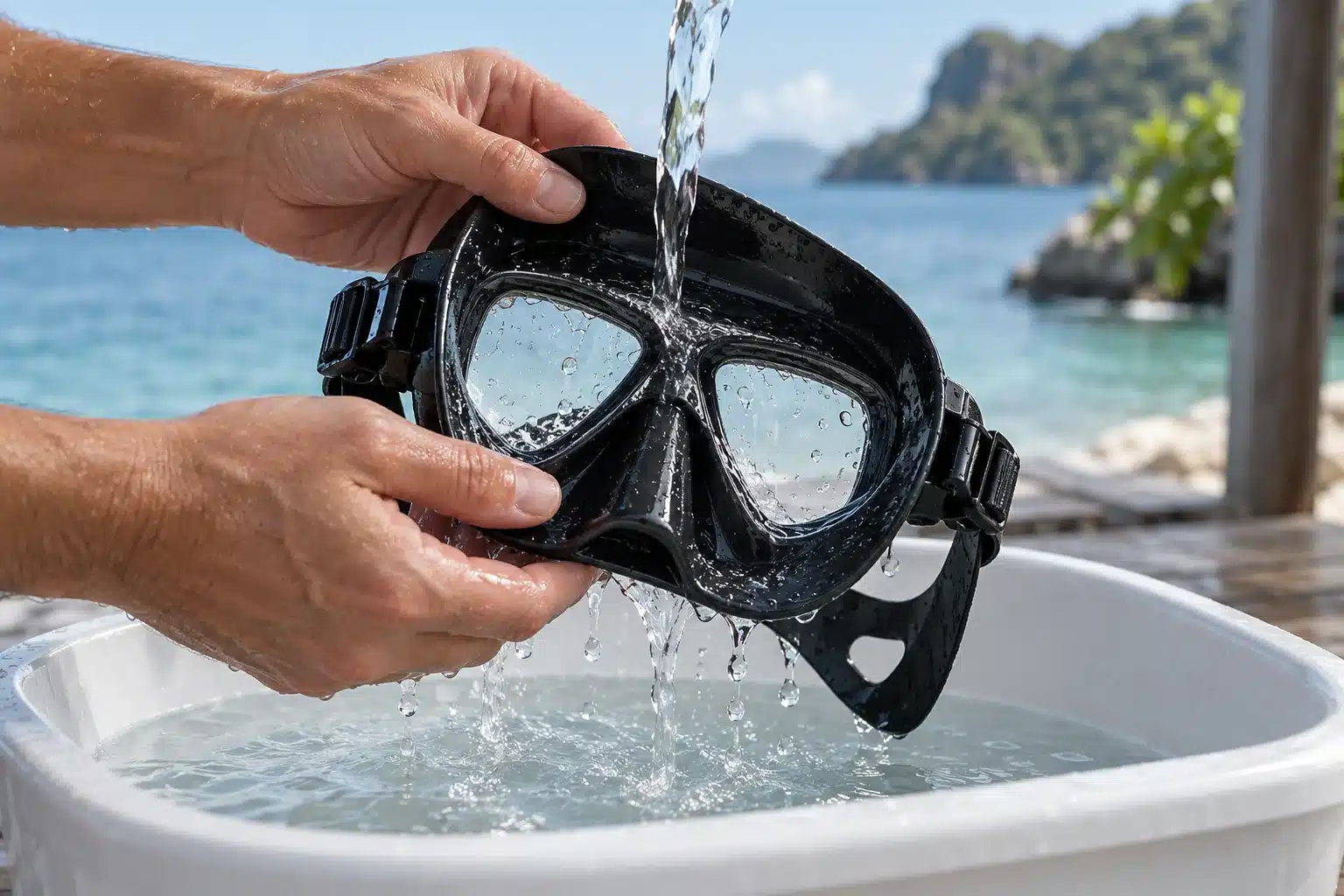
Rinse away salt and grit, then let the skirt dry without being folded or compressed. AI-generated illustration.
After diving, rinse the mask with fresh water and follow its manufacturer’s cleaning instructions. Let it dry away from direct heat and sunlight, then store it so the soft skirt is not bent underneath other equipment.
Before the next dive, inspect the sealing edge again. Salt, sand and a skirt stored in a folded position are worth checking before assuming the mask no longer fits. If you find a tear, cracked lens or unreliable buckle, have the equipment assessed or replaced.
A Short Check Before Your Bali Dive

Pre-dive preparation is the time to raise equipment-fit concerns with your guide. Photo from the Bali Fun Diving media library.
Before leaving the preparation area, put the mask on with your regulator in place and check the fit. If you are using rental equipment, say early if the mask digs into your face or will not stay sealed. Testing another model on land is much easier than managing repeated leaks underwater.
Before Your Next Dive
If water in your mask makes you anxious, tell your instructor before the dive. Practise with support in controlled water; if a leak affects your vision or comfort underwater, signal your buddy or guide and follow your training.
Ready for a More Comfortable Dive?
Talk to our team
