Choosing Between Try Scuba and an Open Water Course
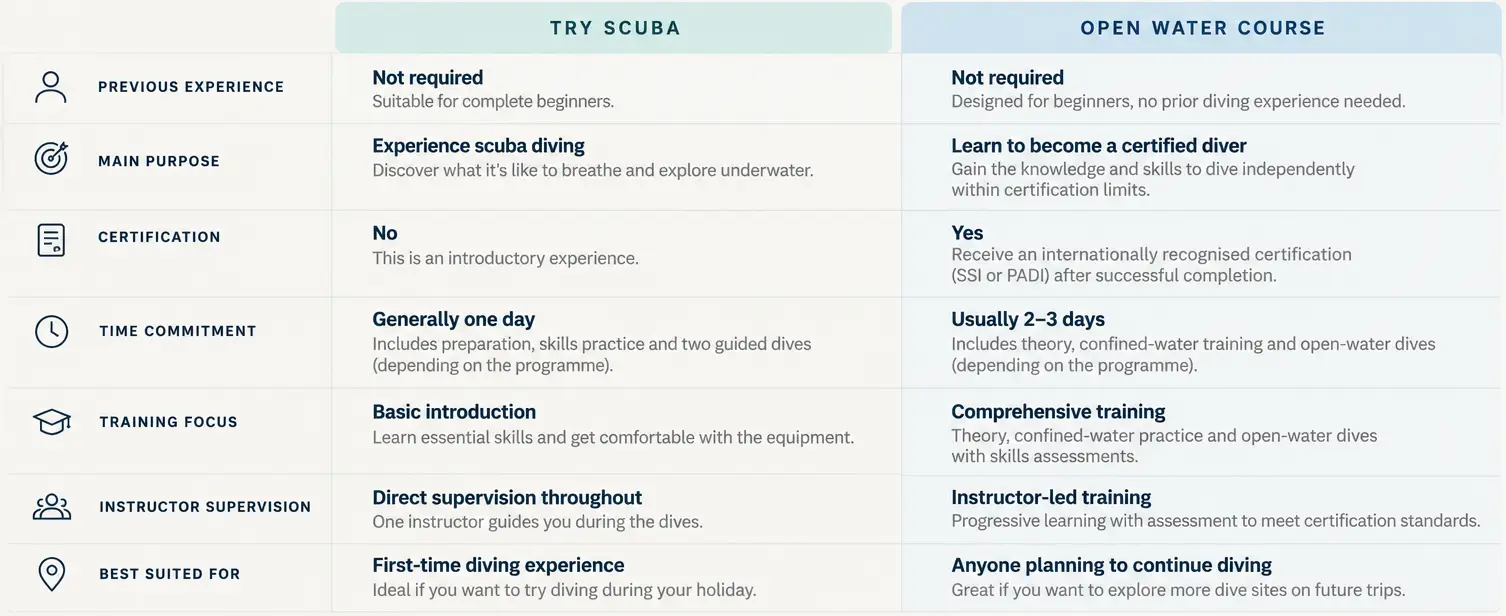
Your first dive in Bali can be a one-day experience or the start of a qualification. Both Try Scuba and the Open Water Diver Course welcome beginners, so previous diving experience is not what decides between them.
Start with your available days, comfort in the water and plans for future trips. The comparison below shows what each option involves, followed by practical situations to help you choose.
Try Scuba and Open Water at a Glance
|
What matters |
Try Scuba |
Open Water Course |
|---|---|---|
|
Previous diving experience |
Not required |
Not required |
|
Main purpose |
Experience diving with an instructor |
Learn to become a certified diver |
|
Time in Bali |
One full-day trip |
Two or three training days, plus eLearning beforehand |
|
Learning |
Briefing and essential skills practice before supervised dives |
Theory, confined-water practice and four required open-water training dives |
|
Result |
Introductory experience, no entry-level diver certification |
SSI or PADI certification after passing all requirements |
|
Future diving |
Introductory programme limits and professional supervision apply |
Suitable dives with a certified buddy, within your training, experience and local rules |
“Open-water dives” means dives in the sea. Taking them on a Try Scuba trip does not mean you earn Open Water Diver certification.
What Changes When You Choose a Course?
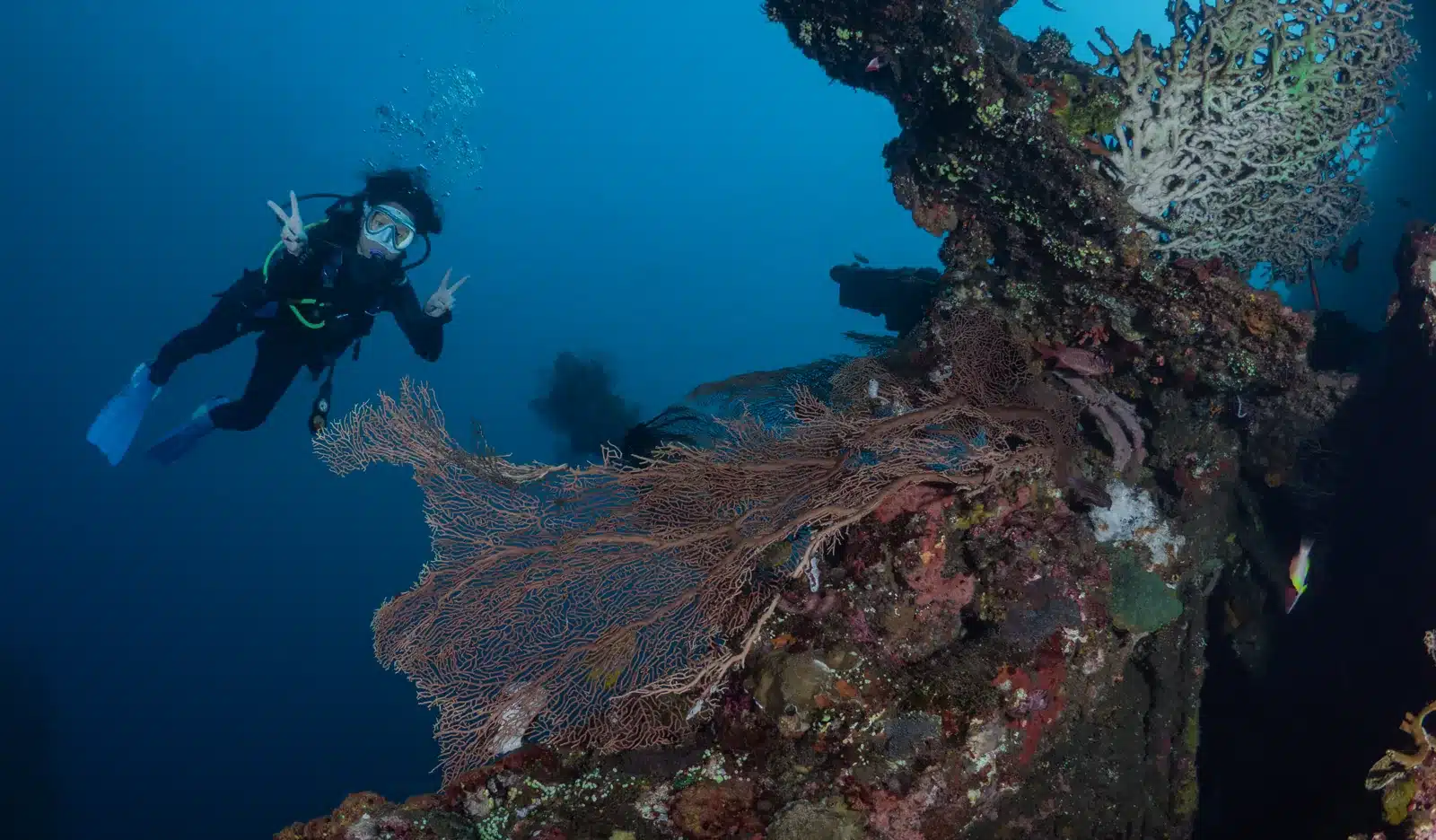
The difference becomes clearer when you picture what you will actually do in the water.
- On an introduction: learn the essential skills, follow the instructor and experience diving under close supervision. The goal is to find out how it feels.
- During certification: practise, receive feedback and demonstrate the required skills. You also learn the knowledge behind the dive, including equipment and planning.
- After certification: choose suitable dives with a certified buddy, within your qualification and experience. You are still responsible for staying within your limits.
Bali Fun Diving’s Try Scuba programme includes skills practice and two open-water dives on its day-trip options. Ask where the initial practice takes place and whether extra pool time would help.
The Open Water Diver Course offers SSI and PADI options over two or three days, with eLearning completed before arrival. It includes confined-water practice and four required open-water training dives. You earn certification by meeting the requirements, rather than simply attending.
Adult Open Water divers generally have an 18-metre maximum, subject to training and experience. Junior limits, conditions and local rules also apply. It is a buddy-diving qualification, not permission to dive alone or at every site.
Match the Support to What Worries You
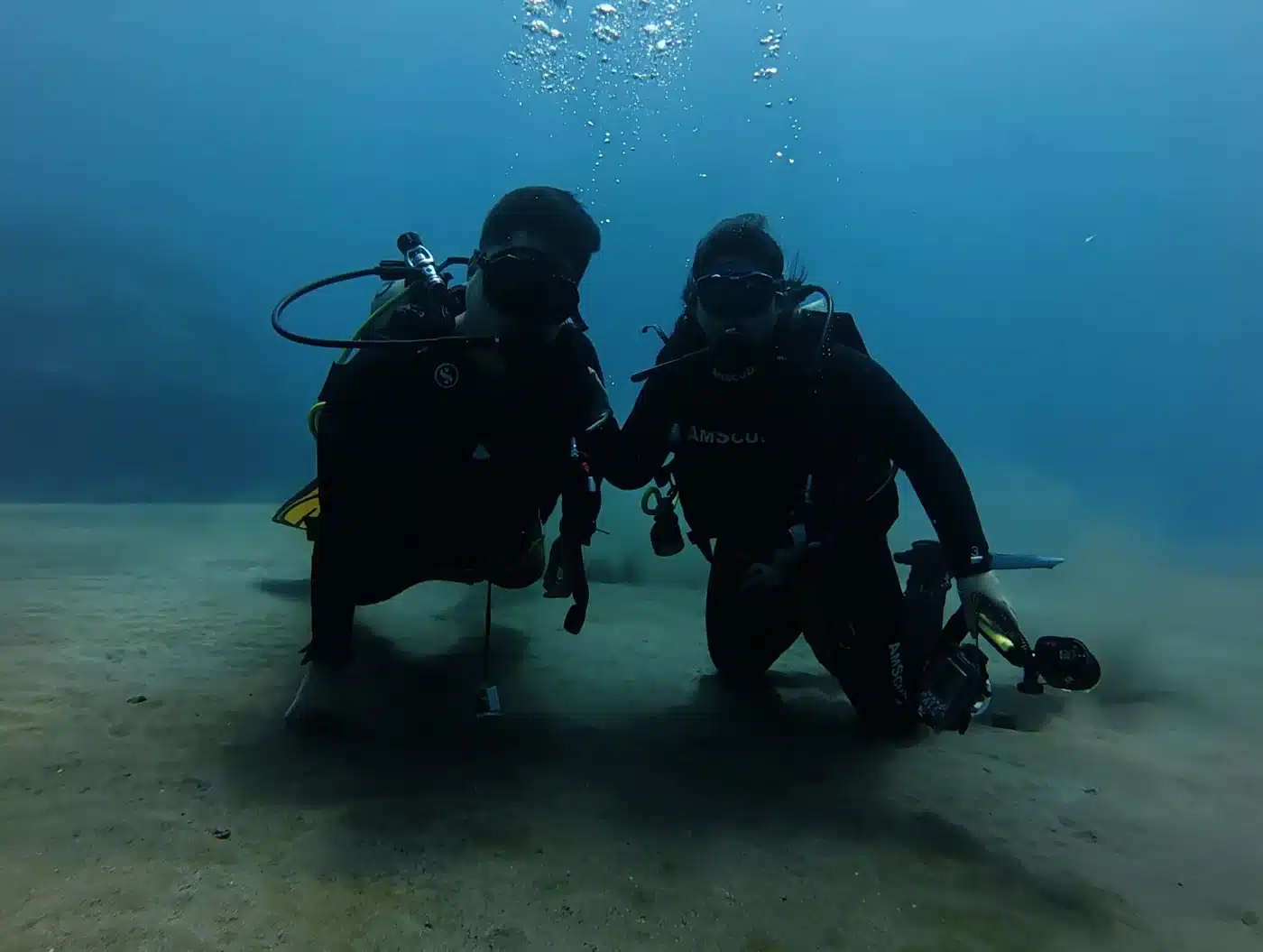
“I’m nervous” can mean several different things. Tell the team which of these sounds like you:
Once you choose a programme, use our first scuba dive guide for preparation. You do not need to teach yourself diving skills before arriving.
Check Your Calendar Before Choosing Two or Three Days
Count the full diving days, the study time before arrival and the required interval before flying or travelling to altitude. Transfers, fitting equipment, briefings and breaks all take time.
The two-day Open Water option can suit someone who has completed the study and can commit to full training days. The three-day option spreads the scheduled training over another day. Both require you to meet the skills and knowledge requirements.
Bali Fun Diving’s course terms state that an additional day of pool practice carries an extra charge. A three-day booking does not include unlimited extra sessions. Confirm the cost and available dates if you would like more time.
Two Days Can Lead to Different Qualifications
Bali Fun Diving also offers a two-day Scuba Diver Course. It includes online learning, confined-water practice and two open-water training dives.
- Scuba Diver: a qualification for diving under professional supervision, to a maximum of 12 metres.
- Open Water Diver: the fuller entry-level qualification for suitable buddy dives within its limits.
- Upgrade later: Scuba Divers can complete the remaining Open Water requirements. Ask about the training and cost before choosing this route.
Scuba Diver can make sense if you want a qualification and expect to keep diving with a professional. Check the course name and outcome, rather than choosing by the number of days alone.
Three Holiday Situations to Help You Decide
One Free Day
A Try Scuba day trip is the option to discuss. Keep the whole day free, and send your flight details before booking. A free morning between other activities is not the same as a free diving day.
Two Training Days Before Departure
Two training days still need the required interval after the final dive. Send your arrival date and exact flight time before booking. Scuba Diver also takes two days, so it does not automatically solve a tight departure schedule.
Diving on Future Holidays
Start with the Open Water options if you are ready to study and practise. Choose the pace you can manage. You do not need an extra Try Scuba booking just to qualify for the course.
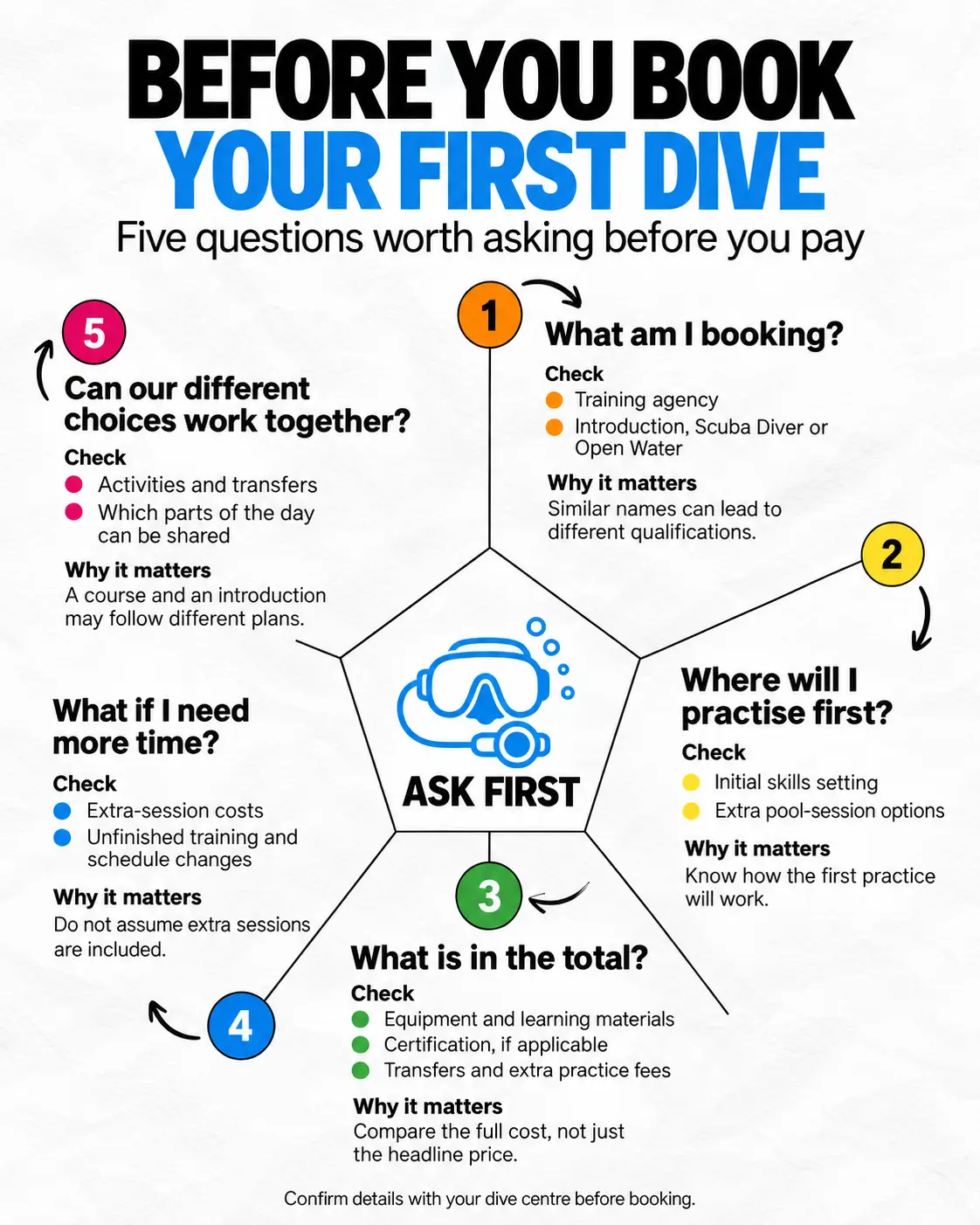
Five Questions Worth Asking Before You Pay