What Happens If You Panic Underwater While Diving
Let’s talk about something most divers think about, but rarely say out loud.
“What if I panic underwater?“
It is one of the biggest fears for beginners. Even certified divers sometimes worry about it. The truth is simple. Panic can happen. But it is manageable. And with the right guidance, it does not have to turn into something dangerous.
Let’s break it down honestly.
Is It Normal to Panic During a Dive
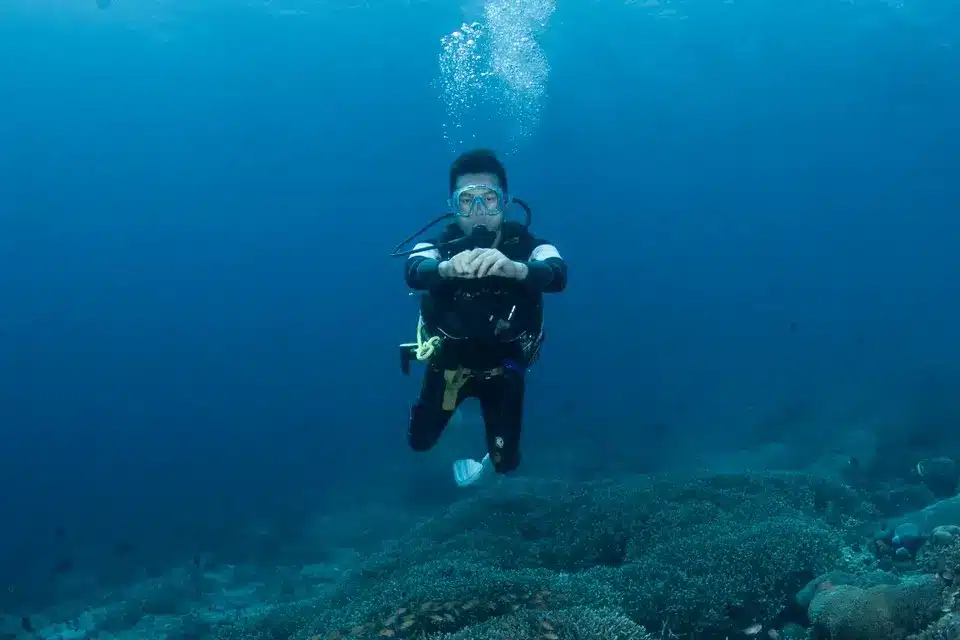
Yes. Completely normal.
When you are underwater, your brain knows you are not in your usual environment. You are breathing through equipment. You feel pressure around you. Sounds are different. Movements are slower.
For some people, especially during their first dive, this can trigger anxiety.
It does not mean you are weak.
It does not mean diving is not for you.
It simply means your body is reacting to something new.
Many confident divers today remember a moment during their first dive where they felt unsure. What matters is how that moment is handled.
What Actually Happens to Your Body When You Panic

Panic underwater is mostly about breathing.
When fear kicks in:
- Your breathing becomes fast and shallow
- Your heart rate increases
- You may feel like you are not getting enough air
- Your focus becomes narrow
Here is the important part. Your regulator is still giving you air normally. The equipment is working. But your brain feels urgency.
Fast breathing causes two problems:
- First, you use air much faster.
- Second, rapid breathing makes you feel even more anxious.
It becomes a small cycle. The faster you breathe, the more uncomfortable you feel.
But the moment you slow your breathing down, everything changes.
Can You Drown If You Panic While Diving

This is the question many people are afraid to ask.
With proper training and a professional dive guide, panic alone does not mean you will drown.
Your scuba equipment continuously supplies air, so there is no need to hold your breath. Swimming strength is not what keeps you safe underwater. Buoyancy helps you stay stable, and a trained guide remains close by to support you at all times.
The real risk is not panic itself. The risk comes from sudden unsafe reactions, like trying to rush to the surface or removing the regulator.
That is why training always focuses on one key rule: breathe and signal your guide.
When those two things happen, situations stay under control.
What Should You Do If You Start Feeling Panic

The most important step is simple. Stop.
Do not swim fast. Do not rush upward.
Pause your movement and focus only on breathing. Long, slow inhale. Slow exhale.
Then signal your dive guide. Every guide is trained to recognize stress and respond immediately. Often they are already watching your breathing pattern.
Many times, just holding onto a stable rock or your guide’s arm helps you feel grounded again.
Within seconds, once breathing slows down, your mind becomes clear again.
Most panic episodes underwater last less than a minute when handled properly.
How Dive Guides Handle Panic Situations
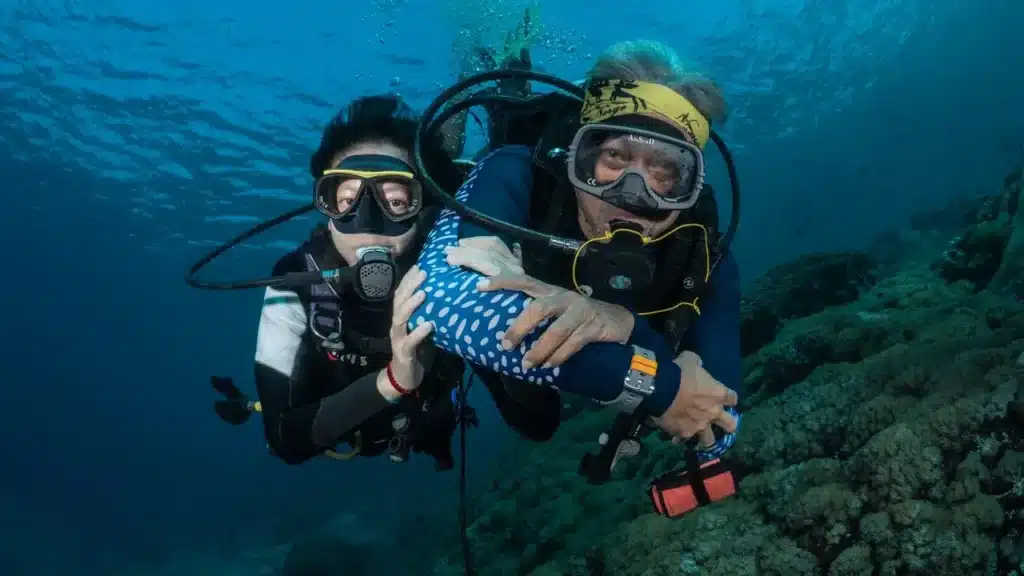
This is something many beginners do not realize.
Dive guides are constantly observing small details:
- Breathing rhythm
- Body tension
- Eye movement
- Hand signals
If a diver looks uncomfortable, a guide moves closer even before a signal is given.
If needed, the guide will:
- Make direct eye contact
- Signal to slow breathing
- Hold the diver gently for stability
- Control buoyancy
- Begin a calm, slow ascent if necessary
The goal is always the same. Slow everything down.
In most cases, once a diver feels supported and realizes they are still breathing normally, calm returns quickly.
How to Prevent Panic Before It Starts

Prevention is always easier than recovery.
Here are practical ways to reduce the chance of panic:
- Be honest about your experience level.
- Choose beginner friendly dive sites with calm conditions.
- Listen carefully during the briefing.
- Ask questions before entering the water.
- Do not rush the descent.
- Focus on slow breathing from the beginning.
In Bali, there are calm areas like Amed and certain parts of Padang Bai that are often more comfortable for new divers. Starting in relaxed conditions builds confidence naturally.
The Honest Truth About Panic

Many divers who experience a brief moment of panic during their first dive later become confident and relaxed underwater.
Why?
Because they learn something powerful. In that moment, they discover they can control their breathing, trust their equipment, and rely on the guide beside them.
That realization builds confidence quickly. What felt overwhelming at first becomes manageable. The diver understands that the situation was never out of control, only unfamiliar.
Confidence in diving does not come from never feeling fear. It comes from learning how to manage it calmly.
And once you experience that control underwater, something changes. The ocean starts to feel peaceful instead of overwhelming.
Ready to Dive With the Right Support
Feeling nervous about diving is normal. What makes the difference is having experienced guides who stay close, explain clearly, and choose the right conditions for you.
A good dive is not about pushing limits. It is about moving at your own pace, feeling comfortable, and building confidence naturally.
If you are thinking about trying scuba diving in Bali, or if you want a calm and supportive experience, we are here to guide you step by step.
Take it slow. Trust the process. Let the ocean show you what it has to offer.
Share this Article