Sea Animals You Can See at Different Depths While Diving in Bali
Bali is famous for its beaches, temples, and culture. But below the surface, a very different world is waiting. As you move deeper into the ocean, light slowly fades, colors change, and new sea animals begin to appear.
Near the surface, coral reefs are full of small, colorful fish. A little deeper, turtles, rays, and reef sharks glide through the water. Go further down, and the ocean becomes quieter and darker, home to larger and rarer creatures. Each depth reveals its own life, behavior, and atmosphere.
This natural layering is what makes exploring the ocean so fascinating. By understanding how sea animals change with depth, every dive becomes a journey through different underwater worlds, each with its own beauty and surprises.
Why Depth Changes Everything Underwater
Depth plays a major role in shaping life in the ocean. Even small changes in depth can create very different environments for marine animals.
As depth increases:
- Sunlight slowly disappears, affecting coral growth and plant life
- Water temperature becomes cooler
- Pressure increases
- Food availability changes
Because of these factors, sea animals adapt to live at certain depth ranges. Some thrive in warm, shallow reefs, while others prefer colder, deeper waters. This is why divers notice clear changes in marine life as they descend.
0 to 5 Meters: Shallow Reefs Full of Color and Life


This is the world of snorkeling and shallow diving. Sunlight is strong, water is warm, and coral reefs grow easily, creating one of the most colorful environments in the ocean.
Here, you can often see:
- Clownfish swimming among sea anemones
- Parrotfish feeding on coral
- Butterflyfish moving gracefully in pairs
- Small reef squid changing colors
- Blue sea stars resting on sandy patches
Shallow reefs are busy, lively, and full of movement. Many small fish hide inside coral branches for protection, while larger fish visit to feed. This zone is ideal for beginners, relaxed dives, and underwater photography.
In Bali, beautiful shallow reefs can be found around Sanur, Padang Bai, and Amed, offering calm conditions and rich marine life.
5 to 18 Meters: Where Most Divers Fall in Love with the Ocean


This depth range is where many divers experience their most unforgettable moments. Coral formations become larger, fish diversity increases, and encounters with bigger marine animals become more common.
This zone is suitable for:
- Try Scuba Diving participants, who usually dive up to around 12 meters under direct instructor supervision
- Scuba Diver certified divers, who are trained to dive up to 12 meters
- Open Water certified divers, who are allowed to dive up to 18 meters
At these depths, divers often meet:
- Green sea turtles resting near coral ledges
- White tip reef sharks cruising slowly along the reef
- Eagle rays gliding through open water
- Frogfish hiding among sponges
- Nudibranchs in many unique shapes and colors
The balance of light, temperature, and coral growth creates an incredibly rich ecosystem. It is also where divers begin to feel more relaxed underwater, improving their buoyancy and breathing control.
Tulamben, Amed, and Padang Bai offer excellent dive sites in this depth range. The famous USAT Liberty Shipwreck in Tulamben is one of the best examples, where coral-covered steel structures attract a wide variety of marine life.
18 to 30 Meters: Bigger Fish and a Wilder Ocean Feel

As divers descend deeper, the underwater world begins to feel more open and dramatic. Coral slopes turn into steep walls, and large schools of fish become more common.
This depth range is suitable for:
- Advanced Open Water certified divers, who are trained to dive up to 30 meters
- Deep Specialty students, who are learning how to safely explore deeper environments under instructor supervision
At this level, divers already have good buoyancy control, improved air management, and stronger awareness of their surroundings. These skills are essential for handling deeper water, where pressure increases and air consumption becomes faster.
In this zone, divers may encounter:
- Barracuda swimming in massive schools
- Giant trevally hunting smaller fish
- Large groupers resting near reef edges
- Black tip reef sharks patrolling deeper waters
The ocean here feels more powerful. Currents can be stronger, visibility often increases, and marine encounters become more intense. Many divers describe this depth range as the point where diving starts to feel truly adventurous.
Nusa Penida, Menjangan Wall, and Tulamben Drop Off are popular locations in Bali where divers can explore these deeper reefs under safe conditions.
Below 30 Meters: The Deep Blue and Rare Encounters


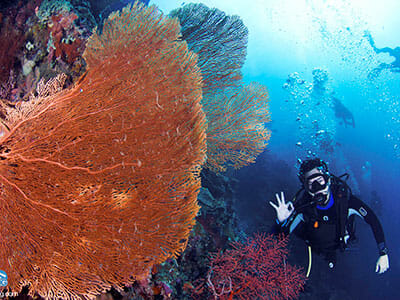

This is the world of advanced diving. Light becomes limited, water turns colder, and only specially adapted animals can survive here. Encounters become rarer but far more memorable.
This depth range is suitable for:
- Deep Specialty certified divers, who are trained to dive safely up to 40 meters
- Technical divers, who use specialized equipment and training to explore even deeper environments
At this level, divers must have excellent buoyancy control, strong air management, and good situational awareness. Deeper dives require careful planning, slow movements, and strict safety procedures.
At these depths, divers may see:
- Mola mola sunfish, especially around Nusa Penida
- Deep reef sharks
- Rare soft corals
- Giant sea fans reaching impressive sizes
Diving below 30 meters requires proper training, experience, and careful planning. Strong currents and lower temperatures demand good control and awareness. For those who reach this zone, the reward is a peaceful, mysterious underwater environment that few people ever experience.
Why Certain Animals Choose Certain Depths
Each marine species selects its depth based on survival needs.
Some animals prefer shallow waters because food is abundant, coral offers shelter, and sunlight supports plant growth. Others move deeper for cooler temperatures, better hunting opportunities, less competition, or safer breeding conditions.
These natural preferences help create balanced ecosystems, where each depth zone supports different types of marine life.
Why Bali Is Perfect for Experiencing All Depth Zones
One of Bali’s greatest strengths is its underwater diversity. In a single region, divers can explore calm shallow reefs, sloping coral gardens, dramatic walls, and deep current channels.
This wide variety makes Bali suitable for all levels, from beginners trying their first dive to experienced divers seeking rare encounters. With professional guidance and proper training, divers can safely experience these different depth zones while learning more about marine ecosystems.
Every depth tells a different story.
Shallow reefs sparkle with color and energy, while deeper waters offer mystery and rare encounters. Exploring these layers allows divers to better understand how the ocean works and how sea animals adapt to their environments.
Whether it is your first time underwater or one of many dives, discovering marine life at different depths always brings new surprises, making each dive feel like a fresh adventure.
Share this Article